
Bathroom remodels and laundry room renovations produce more waste than their small footprints suggest. From old tile and vanities to plumbing fixtures and cabinetry, proper waste planning keeps your renovation on track.
Laundry Room and Bathroom Renovation Waste Planning
Bathrooms and laundry rooms are the smallest rooms in most Jacksonville homes, but renovating them produces a disproportionate amount of waste. Tile on floors and walls, heavy vanities, cast iron tubs, ceramic toilets, old cabinetry, plumbing fixtures, and water-damaged drywall all have to be removed before new materials can go in. Understanding the bathroom remodel order and knowing what waste each phase generates helps you plan disposal efficiently, keep costs down, and avoid delays from overflowing debris piles. The same applies to laundry room renovations, where old cabinets, shelving, flooring, and sometimes plumbing relocations create significant cleanup demands.
Bathroom and laundry renovations are among the most common jobs 904 Dumpster has served in Jacksonville since 2016, with 10, 15, and 20-yard containers starting at $299.
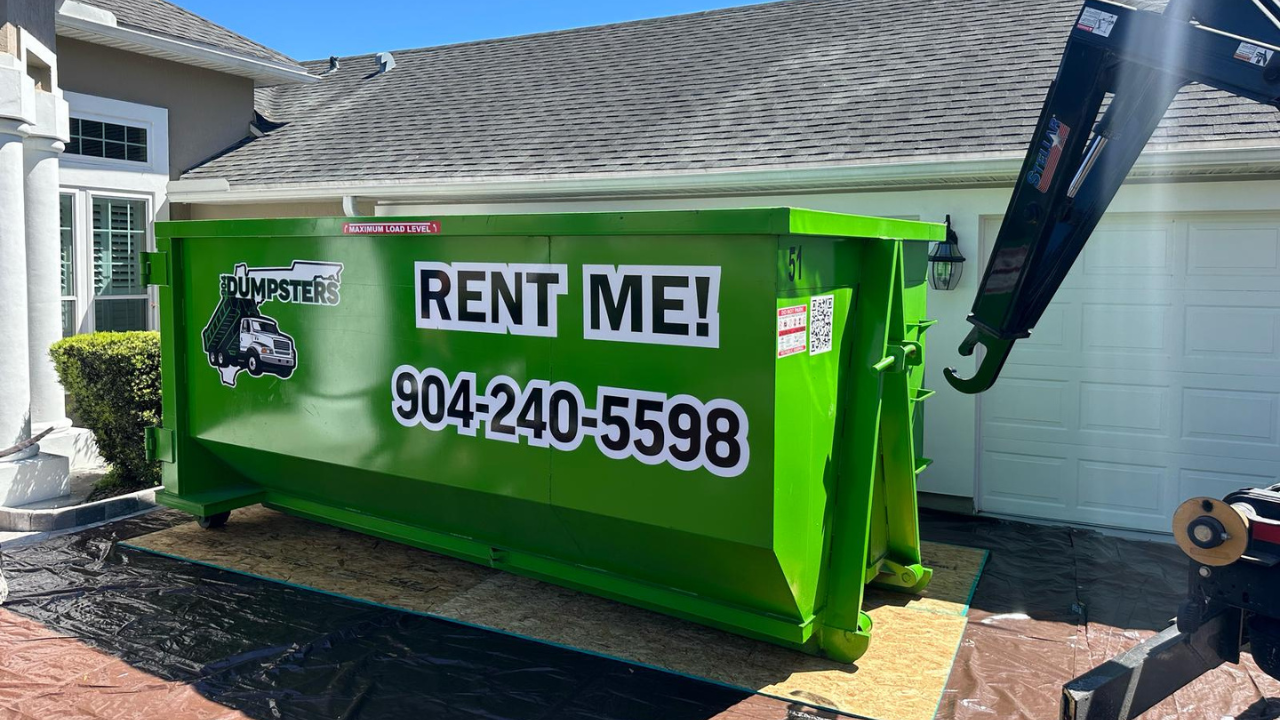
Bathroom Remodel Order and Waste by Phase
Understanding the bathroom remodel order helps you anticipate when the heaviest waste will be generated and plan accordingly.
Phase 1 - Demolition
Demolition is the first and messiest phase. This is when the most waste is produced in the shortest amount of time. Everything that is being replaced comes out: tile, tub or shower enclosure, vanity, toilet, mirror, lighting fixtures, old drywall, flooring, and sometimes cabinetry. In a typical Jacksonville bathroom remodel, demolition generates 70 to 80 percent of the total project waste within the first one to two days.
A standard bathroom demolition produces these approximate weights:
| Item Removed | Approximate Weight |
|---|---|
| Ceramic tile (floor and walls, 80 sq ft) | 400-800 lbs |
| Cast iron bathtub | 300-400 lbs |
| Fiberglass tub/shower unit | 50-80 lbs |
| Vanity with countertop | 50-150 lbs |
| Toilet | 60-80 lbs |
| Water-damaged drywall | 50-200 lbs |
| Old flooring and underlayment | 50-150 lbs |
A single full bathroom demolition can produce 500 to 1,500 pounds of debris depending on the materials involved. If you are remodeling multiple bathrooms, the waste multiplies accordingly.
Phase 2 - Rough-In Work
After demolition, plumbing and electrical rough-in work happens. This phase generates less waste but still produces old pipes, fittings, electrical boxes, wiring, and any additional drywall that needs to be cut for access. Old galvanized or polybutylene pipes being replaced add weight.
Phase 3 - Finishing
The finishing phase, including new tile installation, fixture mounting, and trim work, produces the least waste. Material offcuts, packaging, cardboard, and occasional broken tiles are the primary debris. This is also when many homeowners install WaterSense-labeled fixtures such as toilets and faucets to cut water use in the renovated bathroom. This waste is lighter and less bulky than demolition debris but still adds to the total.
Explore Our Services
Laundry Room Renovation Waste
Laundry room renovations vary widely in scope. Some homeowners focus on cosmetic updates like new cabinets and flooring, while others relocate plumbing, add utility sinks, and reconfigure the entire space. Here is what to expect for waste based on the renovation scope.
Cosmetic Laundry Room Update
Replacing cabinets, countertops, flooring, and paint produces old cabinetry, countertop material, flooring debris, and general packaging. This level of renovation typically generates 200 to 500 pounds of waste.
Full Laundry Room Gut Renovation
A complete laundry renovation that includes plumbing relocation, new flooring, new cabinets, wall modifications, and potentially moving the washer/dryer hookups generates more significant waste. Old drywall, flooring, cabinets, plumbing fixtures, and sometimes structural framing all come out. Laundry renovation cost is often higher than homeowners expect, and waste disposal should be factored into the laundry room renovation price from the start.
Dumpster Sizing for Bathroom and Laundry Projects
| Project Scope | Estimated Waste | Recommended Dumpster |
|---|---|---|
| Single bathroom cosmetic update | 200-400 lbs | Large trash bags or 10-yard |
| Single full bathroom gut remodel | 500-1,500 lbs | 10-yard dumpster |
| Multiple bathroom remodel | 1,500-4,000 lbs | 15-yard dumpster |
| Bathroom + laundry room combo renovation | 1,000-3,000 lbs | 15-yard dumpster |
| Whole-house bathroom renovation (3+ bathrooms) | 3,000-6,000 lbs | 20-yard dumpster |
Dumpster Sizes for Your Project
You Might Also Read
Planning Waste Disposal Before the Renovation
Schedule the Dumpster Before Demo Day
The most important waste planning step is having a dumpster on-site before demolition begins. Bathroom and laundry demolition is fast. A two-person crew can gut a bathroom in half a day, and you do not want hundreds of pounds of tile and fixtures sitting in your garage or driveway waiting for a container. A residential dumpster rental from 904 Dumpster can be delivered same-day or next-day in most of the Jacksonville area.
Sort Salvageable Items First
Before the sledgehammer comes out, remove anything worth saving or donating. Vanities, mirrors, light fixtures, and toilets in good condition can be donated to Habitat for Humanity ReStore in Jacksonville or sold on Facebook Marketplace. Even if you are doing a bathroom remodel for cheap, the disposal savings from donating working fixtures instead of dumping them add up.
Protect the Rest of the House
Bathroom and laundry renovations produce fine dust, especially during tile removal. Seal off the renovation area with plastic sheeting and close HVAC vents in the work zone to prevent dust from spreading throughout the house. This does not reduce waste volume, but it prevents dust damage to other rooms that would create additional cleanup needs.
Bathroom Remodel for Cheap and Where Waste Planning Saves Money
Homeowners looking to do a bathroom remodel for cheap can save money in several ways through smart waste planning.
Right-Size Your Dumpster
Overestimating and renting a dumpster that is too large wastes money. Underestimating and needing a second haul costs even more. For a single bathroom remodel, a 10-yard dumpster at $299 is almost always sufficient. Only step up to a 15-yard if you are remodeling multiple bathrooms or combining the bathroom with other renovation work.
Donate Before You Demo
Every fixture you donate instead of throwing away reduces dumpster weight and extends the capacity for other debris. Functioning toilets, sinks, vanities, and lighting fixtures all have value to someone, and donating them costs nothing.
Combine Projects
If you are renovating a bathroom and a laundry room, or doing multiple bathrooms at once, one dumpster for the combined project is more economical than separate dumpsters for each. Planning multiple rooms at once also means the contractor only mobilizes once, reducing labor costs on top of disposal savings.
Specific Waste Challenges in Jacksonville Renovations
Jacksonville's climate creates some unique waste challenges in bathroom and laundry renovations.
Mold-Damaged Materials
Florida's humidity means bathrooms with poor ventilation often develop mold behind walls and under floors. When demolition reveals mold-damaged drywall, insulation, or subfloor, those materials need to be removed and disposed of. Mold-damaged drywall is heavier than dry drywall because of moisture absorption. Budget for extra disposal capacity if your pre-renovation inspection suggests moisture problems.
Older Home Considerations
Jacksonville neighborhoods like Riverside, Avondale, Ortega, and Springfield have many homes built before 1970. These homes may have lead paint, asbestos-containing tiles or adhesives, and galvanized plumbing that are all specific to older construction. Materials containing asbestos require professional abatement and cannot go in a standard dumpster. Have suspect materials tested before demolition. For a full list of restricted materials, see our guide to what cannot go in a dumpster.
We serve homeowners throughout Northeast Florida including Ponte Vedra, St. Augustine, Jacksonville Beach, and Middleburg. Book online or call us at (904) 240-5598 to get a dumpster delivered before your renovation begins.
Frequently Asked Questions
A single full bathroom gut remodel produces 500 to 1,500 pounds of waste depending on the materials. Tile-heavy bathrooms with cast iron tubs are at the higher end. A standard bathroom remodel fits in a 10-yard dumpster. Multiple bathrooms may require a 15-yard.
The standard bathroom remodel order is: demolition, plumbing and electrical rough-in, subfloor repair, waterproofing, wall preparation, tile installation, vanity and fixture installation, and final finishing. The demolition phase generates the most waste, so have your dumpster ready before that first day.
Disposal costs for a laundry room renovation range from $299 to $399 for a dumpster rental from 904 Dumpster, depending on the scope of work and the dumpster size needed. Most laundry room renovations fit in a 10-yard dumpster at $299. Factor this into your total laundry room renovation price during the planning phase.
Yes. Toilets, bathtubs (including cast iron), sinks, vanities, shower enclosures, and other bathroom fixtures are accepted in our dumpsters. Cast iron tubs are extremely heavy, so account for their weight when estimating total waste.
Tile and mortar can go directly into a roll-off dumpster. They are heavy materials, so be aware of weight limits. For a single bathroom, tile and mortar debris typically ranges from 400 to 800 pounds. This is well within the capacity of a 10-yard dumpster.
If your update is limited to painting, replacing fixtures, and swapping a vanity without any tile or drywall removal, you may not need a dumpster. Heavy-duty trash bags can handle light renovation debris. But if you are removing any tile, tearing out drywall, or replacing flooring, a dumpster makes the project much easier and cleaner.
Tags
Related Articles
What Size Dumpster Do I Need? Complete Dumpster Size Guide
The right dumpster size saves money and prevents project delays. This guide covers every common roll-off size with exact dimensions, weight allowances, and project recommendations so you pick the right fit on the first call.
Flooring Removal Waste and Disposal Guide for Homeowners
Flooring removal generates bulky, heavy waste that does not fit in standard trash bins. Whether you are ripping up carpet, removing laminate wood flooring, or pulling up old tile, here is what to expect and how to handle the debris.
Yard Drainage Solutions and Debris Removal Guide
Yard drainage projects generate significant amounts of dirt, gravel, old pipe, and landscaping debris. Understanding what waste to expect and how to dispose of it keeps your drainage project on schedule and your property clean.