
Flooring removal generates bulky, heavy waste that does not fit in standard trash bins. Whether you are ripping up carpet, removing laminate wood flooring, or pulling up old tile, here is what to expect and how to handle the debris.
Flooring Removal Waste and How to Dispose of It
Replacing the flooring in your home is one of the most impactful renovation projects you can take on. But before new floors go down, the old ones have to come up. Whether you are removing laminate wood flooring from a living room, ripping up carpet from bedrooms, pulling laminate tile flooring from a kitchen, or dealing with decades-old hardwood that is beyond refinishing, the debris from flooring removal is heavier and bulkier than most homeowners anticipate. A single room of tile can weigh hundreds of pounds. An entire house of carpet and pad fills a pickup truck bed several times over.
Flooring tear-outs are dense, weight-limited jobs, and 904 Dumpster has served Jacksonville since 2016 with 10, 15, and 20-yard containers starting at $299.
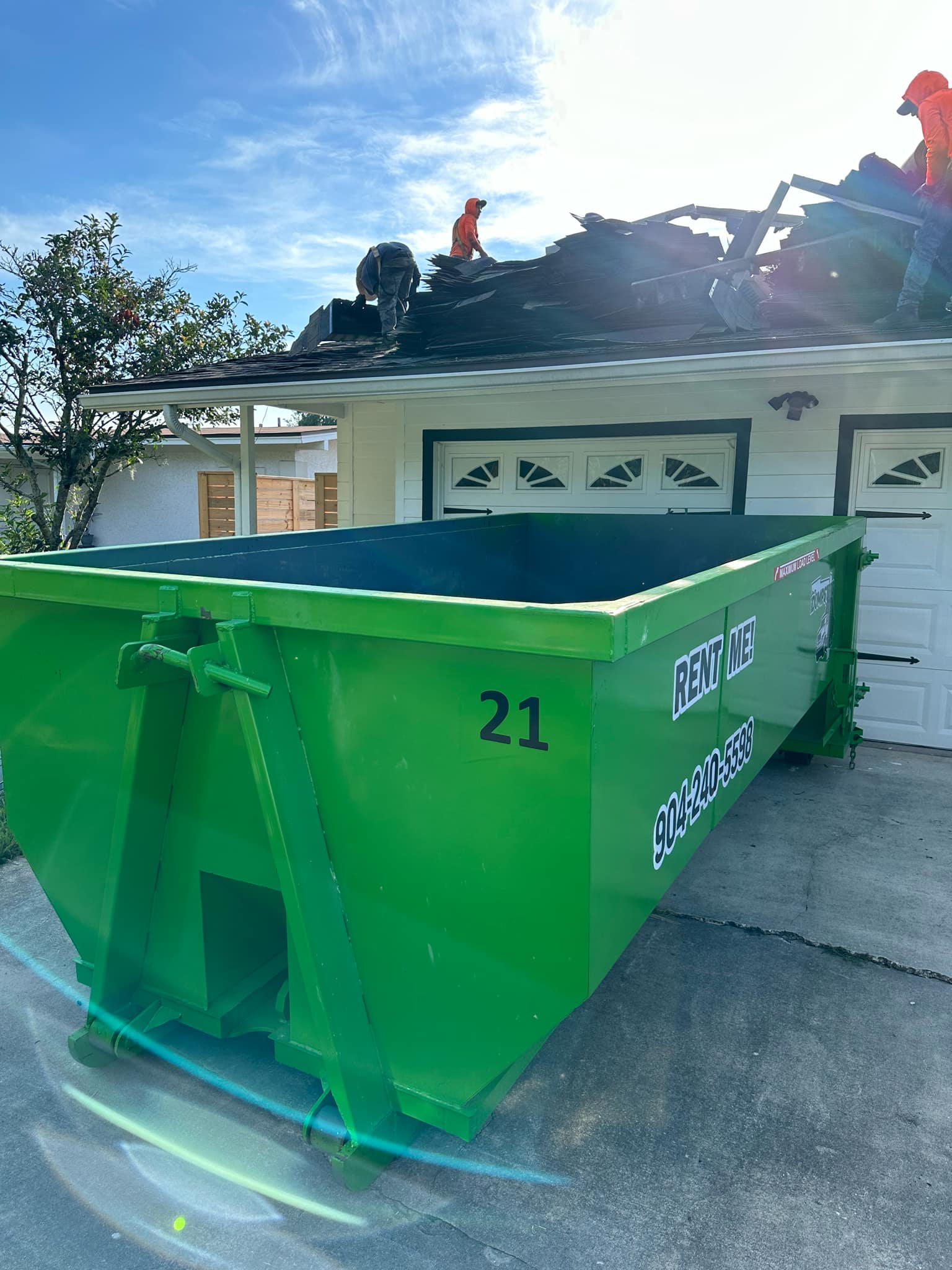
Waste Volume by Flooring Type
Not all flooring materials produce the same amount or weight of waste. Understanding the differences helps you plan for the right dumpster size and set realistic expectations for the removal timeline.
Carpet and Pad Removal
Carpet is one of the easiest flooring materials to remove, but it creates deceptively bulky waste. A standard room with carpet and padding generates large, rolled bundles that take up significant volume in a dumpster even though they are relatively lightweight. For a whole-house carpet removal in a typical 1,500 to 2,500 square-foot Jacksonville home, expect 1 to 3 cubic yards of rolled carpet and pad, plus tack strips, staples, and adhesive residue scraps. Many homeowners wonder how much to rip up carpet will cost in terms of disposal, and the answer is that a 10-yard dumpster handles most whole-house carpet removals.
Laminate and Engineered Wood Flooring Removal
Removing laminate wood flooring produces a moderate amount of waste. Laminate planks are thin and relatively lightweight, but the underlayment beneath them adds volume. A laminate floor removal tool like a pry bar and floor scraper makes the job faster, and the resulting waste stacks relatively flat in a dumpster. Most single-story laminate removals fit in a 10-yard dumpster. Removing laminate tile flooring follows a similar process and produces a comparable amount of waste.
Ceramic and Porcelain Tile Removal
Tile removal generates the heaviest waste per square foot. Ceramic and porcelain tiles, combined with the mortar or thinset beneath them, create dense, heavy debris. A 200-square-foot bathroom of tile and mortar can weigh over 1,000 pounds. Full-house tile removal in Jacksonville homes, especially those with tile throughout the living areas as is common in Florida construction, can easily produce 2 to 4 tons of waste. A 15-yard or 20-yard dumpster is typically necessary for whole-house tile removal.
Hardwood Floor Removal
When hardwood floors are beyond the point where wood floors refinishing or wood floor sanding and refinishing can save them, full removal is the only option. Torn-out flooring counts as construction and demolition debris, a waste stream the EPA tracks for its high recovery potential. Solid hardwood generates moderately heavy waste. Nail-down hardwood over a plywood subfloor is faster to remove than glue-down hardwood, which comes up in small, stubborn pieces. Expect more waste from glue-down removal because the adhesive layer and sometimes the top layer of subfloor come up with the wood.
Subfloor Removal and Replacement
How long does subfloor last? In Jacksonville's humid climate, plywood subfloors can last 20 to 30 years under normal conditions, but moisture damage from leaks, floods, or poor ventilation can shorten that significantly. If your flooring removal reveals a damaged or rotting subfloor, that additional layer of plywood or OSB adds to the waste volume and weight. Subfloor replacement debris can add 1 to 2 cubic yards per room.
Explore Our Services
Waste Estimates by Project Size
| Project | Estimated Debris Weight | Estimated Volume | Recommended Dumpster |
|---|---|---|---|
| Single room carpet removal | 100-200 lbs | Under 1 cubic yard | Trash bags or 10-yard |
| Whole-house carpet removal (1,500 sq ft) | 400-800 lbs | 2-3 cubic yards | 10-yard dumpster |
| Single room tile removal | 500-1,500 lbs | 1-2 cubic yards | 10-yard dumpster |
| Whole-house tile removal (1,200 sq ft) | 3,000-6,000 lbs | 4-8 cubic yards | 15-yard or 20-yard dumpster |
| Laminate removal (whole house) | 300-600 lbs | 2-3 cubic yards | 10-yard dumpster |
| Hardwood removal with subfloor damage | 1,000-3,000 lbs | 3-5 cubic yards | 15-yard dumpster |
Dumpster Sizes for Your Project
Preparing for Flooring Removal Waste
Clear the Room Completely
Move all furniture, appliances, and personal items out of the room before removal begins. This seems obvious, but many homeowners underestimate how much space the removal crew needs. Flooring debris flies, dust spreads, and you do not want belongings in the way or at risk of damage.
Protect Adjacent Rooms
Hang plastic sheeting over doorways to contain dust, especially during tile removal. Tile and mortar demolition creates significant dust that will travel throughout your home if not contained. This is particularly important in Jacksonville homes where open floor plans are common and dust can reach bedrooms and kitchens quickly.
Have the Dumpster Ready Before Work Starts
The biggest waste management mistake in flooring projects is not having a disposal plan in place on day one. Flooring debris piles up fast. Within the first hour of tile removal, you can have hundreds of pounds of material that needs to go somewhere. Having a residential dumpster rental in your driveway before the first tile is pulled saves time and keeps the work area clear.
Know What Is Under the Floor
Before committing to a removal approach, find out what is beneath your existing flooring. In older Jacksonville homes, you might find multiple layers of flooring stacked on top of each other: vinyl over tile over hardwood over subfloor. Each additional layer increases waste volume and removal complexity. Homes built before 1980 may have vinyl flooring or adhesive containing asbestos, which requires professional abatement and cannot go in a standard dumpster.
You Might Also Read
Wood Floor Refinishing vs. Replacement
If you have hardwood floors that look worn, it is worth considering wood floors refinishing before committing to removal. Wood floor sanding and refinishing can restore the appearance of solid hardwood floors at a fraction of the cost and waste of full replacement. The refinishing process generates fine sawdust rather than heavy demolition debris, and the dust is typically contained by the sanding equipment.
However, refinishing is not always an option. Floors that have been refinished multiple times and have thin remaining wood, floors with deep water staining or structural damage, and engineered hardwood floors with very thin veneer layers may not have enough material left to sand. In those cases, replacement is the only path forward, and you will need to plan for full removal waste.
Wood floor installation cost is another factor homeowners weigh when deciding between refinishing and replacement. The waste from a full replacement adds to the total project budget, so factoring in dumpster rental costs during planning gives you a more accurate comparison.
Disposal Options for Flooring Materials in Jacksonville
Dumpster Rental
A roll-off dumpster is the most efficient option for any flooring removal project that produces more than a few trash bags of waste. You load at your own pace during the project, and we pick up when you are done. No multiple trips to the landfill, no loading and unloading from a truck, and no worrying about drop-off hours. Check our dumpster rental pricing page for current rates.
Recycling Opportunities
Some flooring materials can be recycled in Jacksonville. Clean concrete and tile can sometimes be accepted at concrete recycling facilities. Metal transition strips and thresholds have scrap value. Carpet recycling is limited but growing. For information on recycling construction materials in Jacksonville, see our recycling guide for construction projects.
We deliver dumpsters throughout Northeast Florida including Ponte Vedra, Middleburg, Green Cove Springs, and surrounding communities. Book online or call (904) 240-5598.
Frequently Asked Questions
A 10-yard dumpster starting at $299 handles most single-room or whole-house carpet and laminate removals. Tile removal for an entire home may require a 15-yard ($349) or 20-yard ($399) dumpster due to the weight and volume of tile and mortar.
Yes. Ceramic tile, porcelain tile, mortar, thinset, and grout are all accepted in our dumpsters. Be aware that tile debris is very heavy, so weight limits apply. If you are removing tile from a large area, talk to us about the best dumpster option to stay within weight limits.
A typical 1,500-square-foot home with carpet throughout generates approximately 400 to 800 pounds of carpet and pad waste, filling 2 to 3 cubic yards of dumpster space. Roll the carpet tightly to maximize space in the dumpster.
Most laminate flooring is not widely recycled because it is a composite material made of multiple bonded layers. It should be disposed of in a dumpster or taken to the landfill. Some manufacturers have take-back programs, so check with the original manufacturer if the brand is known.
In most cases, baseboards should come off before the flooring is removed. The old baseboards and any associated trim become additional waste. Factor in a small amount of extra debris from baseboard removal, typically a few cubic feet for a whole house.
Carpet can be removed from a full house in one to two days. Laminate removal typically takes one to two days. Tile removal is the slowest and most labor-intensive, often taking three to five days for a whole house. Plan your dumpster rental to cover the entire removal timeline.
Tags
Related Articles
What Size Dumpster Do I Need? Complete Dumpster Size Guide
The right dumpster size saves money and prevents project delays. This guide covers every common roll-off size with exact dimensions, weight allowances, and project recommendations so you pick the right fit on the first call.
What Size Dumpster Do I Need? Complete Dumpster Size Guide
The right dumpster size saves money and prevents project delays. This guide covers every common roll-off size with exact dimensions, weight allowances, and project recommendations so you pick the right fit on the first call.
Yard Drainage Solutions and Debris Removal Guide
Yard drainage projects generate significant amounts of dirt, gravel, old pipe, and landscaping debris. Understanding what waste to expect and how to dispose of it keeps your drainage project on schedule and your property clean.