Jacksonville-area trash generally ends up at Trail Ridge Landfill on the Westside or at a city-permitted transfer station. Here is how the system works, when a personal dump run makes sense, and when a roll-off dumpster from 904 Dumpster is the cheaper option.
If you are searching "landfill near me" or "dump near me" in Jacksonville, the short answer is Trail Ridge Landfill on the Westside, the regional facility most Duval County trash and construction debris eventually reaches, often by way of a city transfer station first. For a full cleanout, renovation, or debris haul, book a 904 Dumpster roll-off online or call (904) 240-5598 and skip the gate fees and truck trips entirely.
Where Does Jacksonville's Trash Actually Go?
Most Duval County residential trash does not go straight to a landfill. It is collected curbside, hauled to a transfer station where it is consolidated into larger loads, then trucked to Trail Ridge Landfill for final disposal. Construction and demolition debris follows a similar path when it is not diverted for recycling. Our companion guide on what a transfer station is and how waste reaches its final destination covers that middle step in more detail.
If you are hauling debris yourself rather than using curbside pickup, the City of Jacksonville's Solid Waste Division is the authoritative source for current landfill and transfer station hours, accepted materials, and gate fees, since these change periodically.
Can I Just Take My Debris to the Dump Myself?
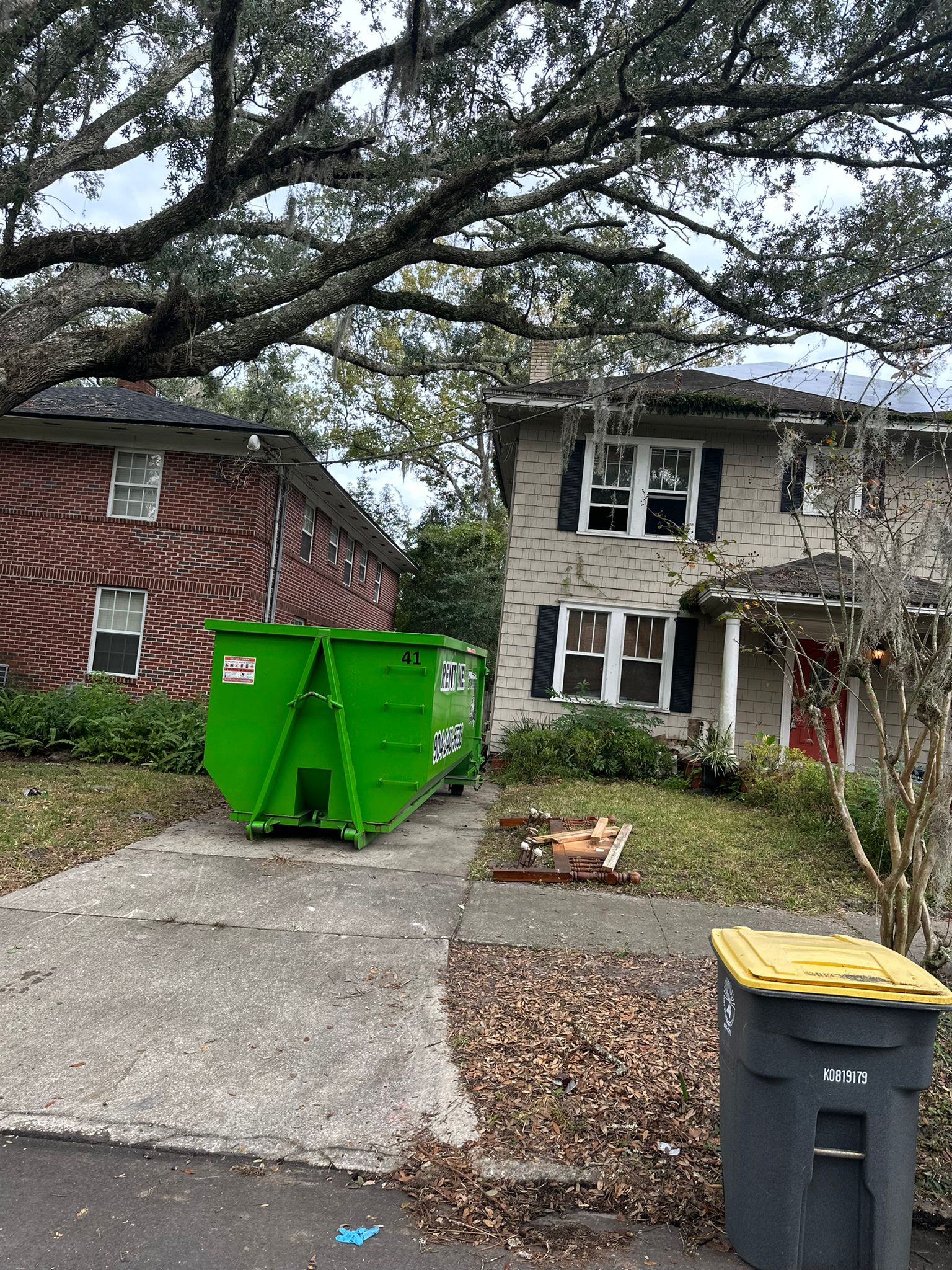
For a single load that fits in a pickup truck, yes — a personal dump run is usually the cheapest option. But the math flips quickly once a project generates more than one or two truckloads:
Most Jacksonville homeowners hit the break-even point at 2-3 truckloads, after which a flat-rate roll-off dumpster from 904 Dumpster costs less than the combined fuel, time, and gate fees of doing it yourself — and the container sits in your driveway so you load it once instead of your truck bed repeatedly.
Explore Our Services
What Cannot Go to the Landfill (Or in a Dumpster)
Not everything belongs in general household trash, at either the curb or the landfill gate. Items that require special handling instead of standard disposal include:
We cover each of those categories, with Jacksonville-specific disposal guidance, in separate guides linked at the end of this article. None of these can go in a 904 Dumpster roll-off container either — see our full prohibited items list before you load.
Construction Debris Gets Diverted Before It Reaches the Landfill
Not all construction and demolition debris ends up buried. Clean concrete gets crushed and reused as road base, clean wood gets ground into mulch, and scrap metal gets pulled for recycling before the rest reaches the landfill. This diversion happens at the transfer station or a dedicated C&D recycling facility, not curbside, which is one more reason a roll-off dumpster routed through a hauler that sorts loads can recover more material than a straight-to-landfill personal haul. Our recycling guide for Jacksonville construction projects covers which materials get diverted and how to keep loads separated if you want to maximize what gets recycled instead of landfilled.
You Might Also Read
What Counts as Construction Debris vs. Household Trash
The dividing line matters because it determines which disposal path applies. Drywall, lumber, flooring, roofing material, and tile all count as construction and demolition debris and require a dumpster or dedicated drop-off, not curbside pickup, regardless of volume. See our full guide to what can and cannot go in a dumpster for the complete breakdown by material.
Sizing a Dumpster Instead of Multiple Landfill Runs
Once you have decided a roll-off makes more sense than repeated dump runs, the next question is size. A 10-yard replaces roughly 3 pickup truck loads, a 15-yard about 5, and a 20-yard about 7, at flat rates from $299. See our full pricing breakdown for how these compare county by county.
A Personal Dump Run Costs More Time Than People Expect
Between loading the truck, driving to Trail Ridge or a transfer station, waiting in the gate line, unloading, and driving back, a single trip routinely takes an hour or more, longer during peak weekend hours when other homeowners are making the same run. Multiply that by 3 to 7 trips for a midsize project and the time cost alone often exceeds what a flat-rate roll-off would have cost, before counting gate fees or fuel.
Dumpster Rental vs. Landfill Runs: Quick Comparison
| DIY Landfill Run | 904 Dumpster Roll-Off | |
|---|---|---|
| Cost for 3+ loads | $150-$300+ in gate fees alone | Flat $299-$399 |
| Your time | 1-2 hours per trip | Load on your own schedule |
| Vehicle needed | Pickup truck | None |
| Weight limits | Per-trip gate fee | 1-2 tons included |
Frequently Asked Questions
Trail Ridge Landfill on the Westside is the primary regional landfill serving Duval County. Many residential loads route through a transfer station first rather than going directly to the landfill. Check the City of Jacksonville Solid Waste Division for current hours and accepted materials before hauling a load yourself.
For a single small load that fits in a pickup truck, a dump run is usually cheaper. For 2 or more truckloads, a flat-rate roll-off dumpster from 904 Dumpster is typically cheaper once you factor in gate fees, fuel, and your time.
No. Construction and demolition debris — drywall, lumber, roofing, flooring — needs a roll-off dumpster or a dedicated landfill drop-off. Standard curbside trash service is not built for renovation-volume debris.
Hazardous materials like paint, chemicals, and propane, along with batteries, electronics, tires, and medical sharps, all require separate disposal streams. See our prohibited items list for the full rundown of what a 904 Dumpster roll-off cannot accept.
Skip the Gate Fees — Book a Roll-Off Instead
For any project generating more than a truckload or two of debris, book a 904 Dumpster roll-off online with flat-rate pricing from $299 and same-day delivery across Jacksonville. Call (904) 240-5598 with questions about what fits.
Tags
Related Articles
Where Does Trash Go After You Throw It Away?
Most people never think about what happens to their trash after it leaves the curb. This guide follows the path of waste from collection to final disposal, including how dumpster rental waste is processed.
What Can and Cannot Go in a Dumpster Rental Container
Knowing what can and cannot go in a dumpster prevents extra fees, load rejection, and potential fines. This complete guide covers accepted items, prohibited materials, and disposal alternatives for everything in between.
How Dumpster Rental Pricing Works in 2026
Dumpster rental costs vary widely depending on size, location, and rental period. This pricing guide breaks down average costs for every dumpster size and shows you how to avoid hidden fees that inflate the final bill.