Yard drainage projects generate significant amounts of dirt, gravel, old pipe, and landscaping debris. Understanding what waste to expect and how to dispose of it keeps your drainage project on schedule and your property clean.
Yard Drainage Solutions and Debris Removal
Standing water in your yard is more than an inconvenience. In Jacksonville's flat terrain with its high water table and heavy seasonal rainfall, a yard not draining water properly can lead to foundation damage, mosquito breeding, landscape destruction, and soil erosion. Yard drainage solutions range from simple regrading and French drains to more complex systems involving catch basins and underground piping. Whatever the solution, these projects share one thing in common: they produce a lot of dirt, gravel, old pipe, rock, and landscape debris that needs to go somewhere. Planning for debris removal is just as important as planning the drainage fix itself.
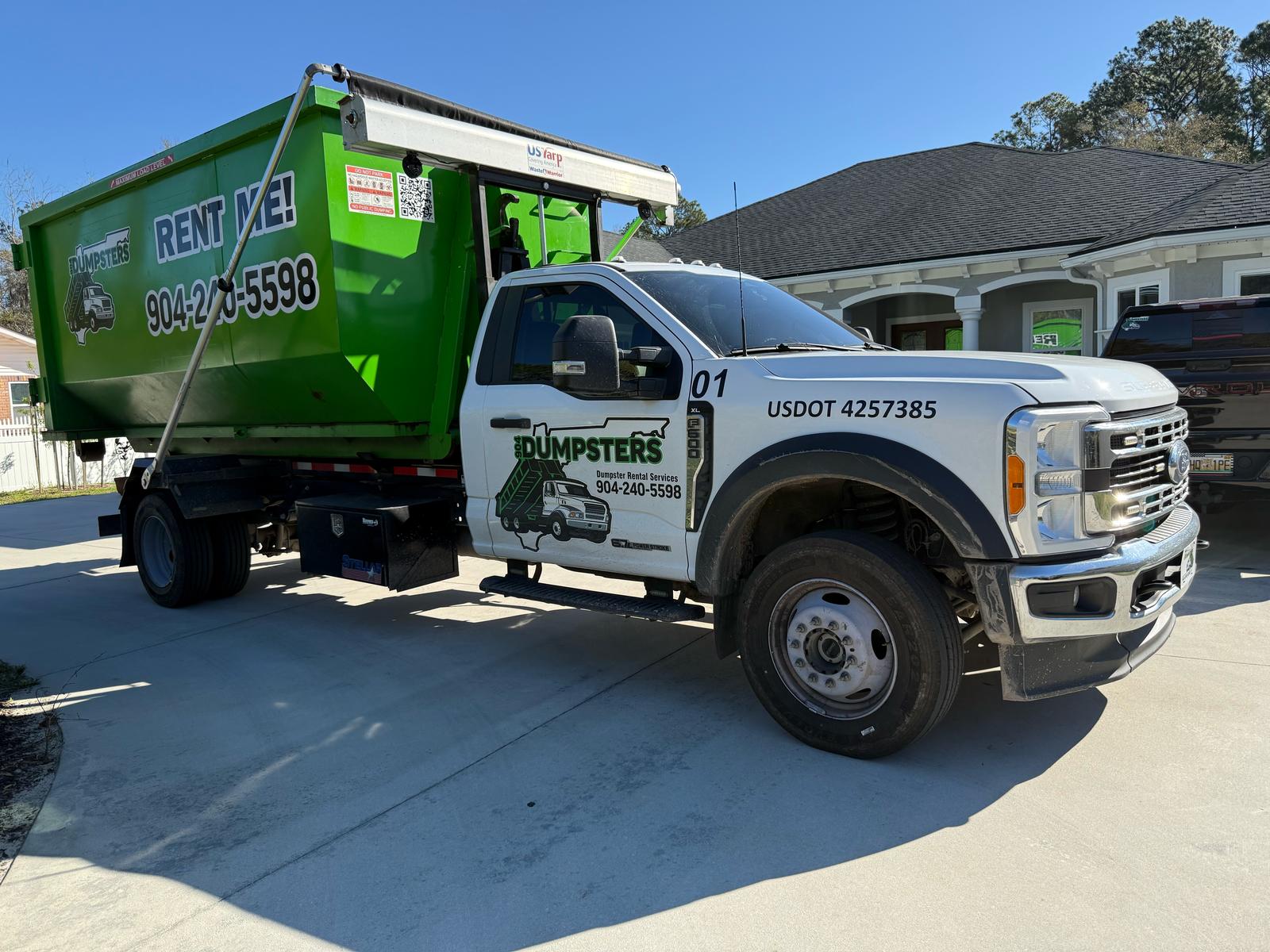
904 Dumpster has served Jacksonville drainage and landscaping projects since 2016, offering 10, 15, and 20-yard containers starting at $299.
Common Yard Drainage Projects and Their Waste
Regrading and Soil Work
The most basic landscape water drainage fix is regrading the yard to redirect surface water away from the home's foundation. Pairing regrading with techniques for managing stormwater runoff at home, such as rain gardens and permeable surfaces, helps the soil absorb water instead of pooling it. Regrading involves moving significant amounts of soil, and often produces excess dirt that needs removal. Many Jacksonville homeowners end up asking how to get rid of extra dirt or where to throw dirt away after a regrading project. A typical residential regrading project can produce 2 to 10 cubic yards of excess soil depending on how much the grade needs to change.
French Drain Installation
French drains involve trenching, laying perforated pipe, and backfilling with gravel. The waste from French drain installation includes all the excavated soil from the trench, any old landscaping materials removed to access the trench route, and potentially old roots and vegetation. A single 50-foot French drain trench can produce 2 to 4 cubic yards of excavated soil.
Catch Basin and Underground Pipe Systems
More complex drainage systems use catch basins connected by solid underground pipe to direct water to a discharge point. Installation requires deeper excavation than French drains and produces more soil, plus old materials if you are replacing a failed existing system. Old concrete catch basins, broken PVC pipe, and deteriorated fittings all become waste.
Removal of Failed Drainage Materials
Sometimes the project is not about installing new drainage but removing old materials that are not working. Clogged gravel beds, collapsed drain tiles, failed fabric barriers, and crushed pipes all need to come out before new materials go in. This creates a mix of soil, gravel, fabric, and pipe debris.
Explore Our Services
How to Dispose of Gravel From Drainage Projects
How to get rid of gravel is one of the most common questions from homeowners doing yard drainage work. Old gravel from French drains, dry creek beds, and landscape borders weighs 2,800 to 3,000 pounds per cubic yard, making it one of the heaviest materials you will deal with.
Disposal Options for Gravel
| Option | Best For | Considerations |
|---|---|---|
| Dumpster rental | Large volumes, mixed materials | Weight limits apply for heavy loads |
| Reuse on property | Clean gravel in good condition | Use for walkways, fill, or drainage elsewhere |
| Landscape supply yards | Clean, sorted gravel | Some accept returns or give credit toward new materials |
| Online listings (dirt wanted) | Any volume of clean fill | Post on Craigslist, Facebook Marketplace, or Nextdoor |
| Landfill drop-off | Any condition | Trail Ridge Landfill accepts inert materials |
The gravel removal cost depends on the disposal method. A dumpster rental provides the most convenient option when you have a mix of gravel, dirt, and other debris. For gravel-only loads, ask about weight limits when booking. Our team can help you determine whether a single load or multiple loads is more cost-effective.
How to Get Rid of Extra Dirt
Jacksonville drainage projects frequently produce excess dirt that the homeowner does not need. Where to take dirt depends on volume and soil condition.
Clean Fill Dirt
Clean fill dirt, meaning soil without contaminants, debris, or vegetation, is actually valuable. Many construction projects, landscaping companies, and homeowners in the Jacksonville area actively search for clean fill. Posting "dirt wanted" or "free fill dirt" on community boards often results in someone coming to take it off your hands. This is the most environmentally friendly and cost-effective disposal method.
Mixed or Contaminated Soil
Soil mixed with roots, vegetation, old mulch, or construction debris cannot typically be given away as clean fill. This material needs to go in a dumpster or be taken to the landfill. When renting a dumpster for a drainage project, soil and dirt are accepted as long as the load stays within weight limits.
Volume Estimates for Dirt Disposal
| Project Type | Estimated Excess Dirt |
|---|---|
| Simple yard regrading | 2-5 cubic yards |
| French drain installation (50 ft) | 2-4 cubic yards |
| Full yard drainage system | 5-15 cubic yards |
| Catch basin installation (per basin) | 1-2 cubic yards |
Dumpster Sizes for Your Project
You Might Also Read
How to Dispose of Landscape Rocks
Drainage projects sometimes require removing existing landscape rocks to access the work area. How to dispose of landscape rocks depends on their type, condition, and volume.
Decorative rocks in good condition, such as river rock, lava rock, and flagstone, can often be sold or given away. Post them online with photos and dimensions. Many Jacksonville homeowners are happy to pick up free landscape rocks.
Broken or deteriorated rocks and stone that cannot be reused should go in a dumpster. Like gravel, rocks are heavy, so account for weight when planning disposal. For large volumes of rock combined with other drainage debris, a 15-yard dumpster or 20-yard dumpster provides the necessary capacity.
Who to Call for Drainage Problems in Your Yard
When your yard is not draining water properly, knowing who to call for drainage problems in your yard is the first step. Different professionals handle different aspects of the problem.
Landscape contractors handle surface-level drainage solutions including regrading, French drains, and landscape drainage systems. They are the right call for most residential yard drainage issues.
Civil engineers are needed when the problem is more complex, such as drainage easement disputes, municipal stormwater connections, or properties with significant grade changes requiring engineered solutions.
Foundation specialists should be consulted if poor drainage has already affected your home's foundation. Drainage repairs in these cases need to be coordinated with foundation repair work.
Plumbing contractors handle connections from downspouts and foundation drains to the municipal stormwater system.
No matter which professional does the work, the debris has to go somewhere. Having a dumpster on-site from day one keeps the project area clean and prevents excavated materials from damaging your lawn, landscaping, or driveway.
Yard Drainage Solutions and Waste Planning Tips
Plan Debris Staging Areas
Before excavation begins, designate an area of your yard for temporary dirt storage. If excess soil will be given away, pile it near the street for easy loading. If it is going in a dumpster, stage it close to the dumpster placement area to minimize wheelbarrow trips.
Protect Your Driveway
Mud and soil from drainage projects track everywhere. Lay down tarps or plywood between the work area and the dumpster to protect your driveway. Jacksonville's sandy soil is easier to clean up than clay, but wet sand tracked onto concrete still creates a mess.
Consider Multiple Disposal Methods
For large drainage projects, a combination approach may be most cost-effective. Give away clean fill dirt for free, recycle or resell usable landscape rock, and rent a dumpster for the mixed debris that nobody wants. This reduces dumpster weight and cost while keeping usable materials out of the landfill.
We deliver dumpsters for drainage projects throughout Northeast Florida including Orange Park, Fleming Island, Ponte Vedra, and Middleburg. For information on disposing of rocks, dirt, and landscaping materials in more detail, see our companion guide on how to dispose of rocks, dirt, and landscaping materials.
Book a dumpster online or call us at (904) 240-5598.
Frequently Asked Questions
Clean fill dirt can often be given away for free by posting on Craigslist, Facebook Marketplace, or Nextdoor. Many construction projects and homeowners in Jacksonville need fill dirt. Soil mixed with debris should go in a dumpster or be taken to the Trail Ridge Landfill.
Gravel removal cost depends on the volume and disposal method. A 10-yard dumpster at $299 can hold several cubic yards of gravel within weight limits. For very large gravel volumes, multiple loads or a larger 15-yard dumpster at $349 may be needed.
Yes. Dirt, rocks, gravel, and soil are accepted in our dumpsters. These materials are heavy, so weight limits apply. Contact us when booking to discuss your specific material and volume so we can recommend the right dumpster size and ensure you stay within weight limits.
You can dispose of dirt at the Trail Ridge Landfill, place it in a dumpster rental, or give it away as free fill dirt to other homeowners and contractors who need it. Posting "free fill dirt" or "dirt wanted" on community boards is often the fastest way to move clean soil.
Decorative landscape rocks in good condition can be sold or given away online. Broken or unusable rocks can go in a dumpster. Consider posting photos on marketplace apps first since landscape rocks in good condition are always in demand in the Jacksonville area.
Start with a landscape contractor for most residential drainage issues. For problems affecting your foundation, consult a foundation specialist. For complex drainage involving municipal connections, you may need a civil engineer or plumbing contractor. All of these projects produce debris that can go in a roll-off dumpster.
Tags
Related Articles
What Size Dumpster Do I Need? Complete Dumpster Size Guide
The right dumpster size saves money and prevents project delays. This guide covers every common roll-off size with exact dimensions, weight allowances, and project recommendations so you pick the right fit on the first call.
How to Dispose of Rocks, Dirt, and Landscaping Materials
Landscaping projects generate heavy, bulky waste including rocks, dirt, old mulch, pavers, and concrete. Knowing where to dispose of these materials saves money and keeps your project moving forward.
Laundry Room and Bathroom Renovation Waste Planning
Bathroom remodels and laundry room renovations produce more waste than their small footprints suggest. From old tile and vanities to plumbing fixtures and cabinetry, proper waste planning keeps your renovation on track.