
A screened-in porch project generates more waste than most homeowners expect. From old framing and screening materials to concrete and packaging debris, proper waste planning keeps your project on schedule and your property clean.
Screened-In Porch Project Debris and Waste Planning
Adding a screened-in porch is one of the most popular home improvement projects in Northeast Florida. Jacksonville homeowners love the idea of enjoying the outdoors without dealing with mosquitoes, no-see-ums, and the relentless summer humidity. Whether you are enclosing an existing patio, converting an open porch into a screened space, or building a brand-new screened-in porch exterior from the ground up, every version of this project produces waste that needs a plan. Old materials come off, new packaging piles up, and concrete dust, wood scraps, and discarded screening accumulate faster than most people anticipate.
904 Dumpster has served Jacksonville home-improvement projects since 2016, offering 10, 15, and 20-yard containers starting at $299 flat.
Types of Waste From a Screened-In Porch Project
Understanding what debris your porch project will generate helps you choose the right disposal method before the first board is cut. Here is a breakdown of the most common waste categories.
Demolition Debris From Existing Structures
If you are converting an existing open patio or replacing an old screened porch, demolition is the first phase. Old concrete pads, cracked pavers, deteriorated wood framing, rusted aluminum frames, torn screening, damaged railings, and rotting deck boards all have to go. In older Jacksonville homes, especially in neighborhoods like Riverside, San Marco, and Murray Hill, existing porch structures may include multiple layers of materials added over the decades. You might find old lattice panels, layers of paint-covered trim, and outdated roofing materials underneath what is visible.
Concrete removal from an existing patio slab creates some of the heaviest waste. If your project involves breaking up a concrete pad for new footings or a different layout, consider our concrete disposal dumpster option, which is designed specifically for heavy materials.
Packaging and New Material Waste
New screened-in porch projects generate a surprising amount of packaging waste. Screen panels, framing lumber, roofing materials, fasteners, and composite decking all arrive wrapped in plastic, strapped to pallets, or packed in cardboard boxes. This packaging volume adds up quickly, especially when screen panels for porch enclosures arrive in protective wrapping to prevent tears during shipping.
Wood and Lumber Scraps
Framing a porch enclosure means cutting lumber to size, which produces offcuts, sawdust, and damaged boards. These scraps fall under the broader category of construction debris that the EPA encourages homeowners to divert from landfills where possible. Pressure-treated lumber is especially common in Jacksonville porch projects because of our climate, and leftover treated wood cannot simply be burned or left on the ground. It needs proper disposal.
Old Roofing Materials
Many screened-in porch projects involve extending or modifying the existing roofline. Stripped shingles, torn underlayment, old flashing, and damaged fascia boards all become waste. Even if the porch uses a separate roof structure, there is usually some tie-in work to the existing house roof that produces debris.
Explore Our Services
How Much Waste Does a Porch Project Produce?
The volume of waste depends on whether you are building new or converting an existing structure. Here is a general estimate:
| Project Type | Estimated Debris Volume | Recommended Dumpster |
|---|---|---|
| Enclosing an existing open porch (no slab work) | 2-4 cubic yards | 10-yard dumpster |
| Replacing an old screened porch | 4-8 cubic yards | 15-yard dumpster |
| New screened porch with slab demolition | 6-12 cubic yards | 15-yard or 20-yard dumpster |
| Large custom screened porch with roof work | 10-15 cubic yards | 20-yard dumpster |
For most standard screened-in porch projects in Jacksonville, a 15-yard dumpster provides enough capacity to handle both demolition debris and new construction waste. If your project includes heavy concrete removal, you may want a separate load or a heavier-rated container.
Dumpster Sizes for Your Project
Planning Waste Removal Before the Project Starts
The best time to arrange waste disposal is before the first day of work, not after debris starts piling up. Here are several steps that keep your project organized.
Schedule Delivery Before Demo Day
Have the dumpster delivered the day before demolition begins. This gives your crew or contractor a place to toss debris from the very first swing. Projects where waste piles up on the ground before a container arrives create extra handling, slow the work down, and risk damage to landscaping.
Choose a Placement Location
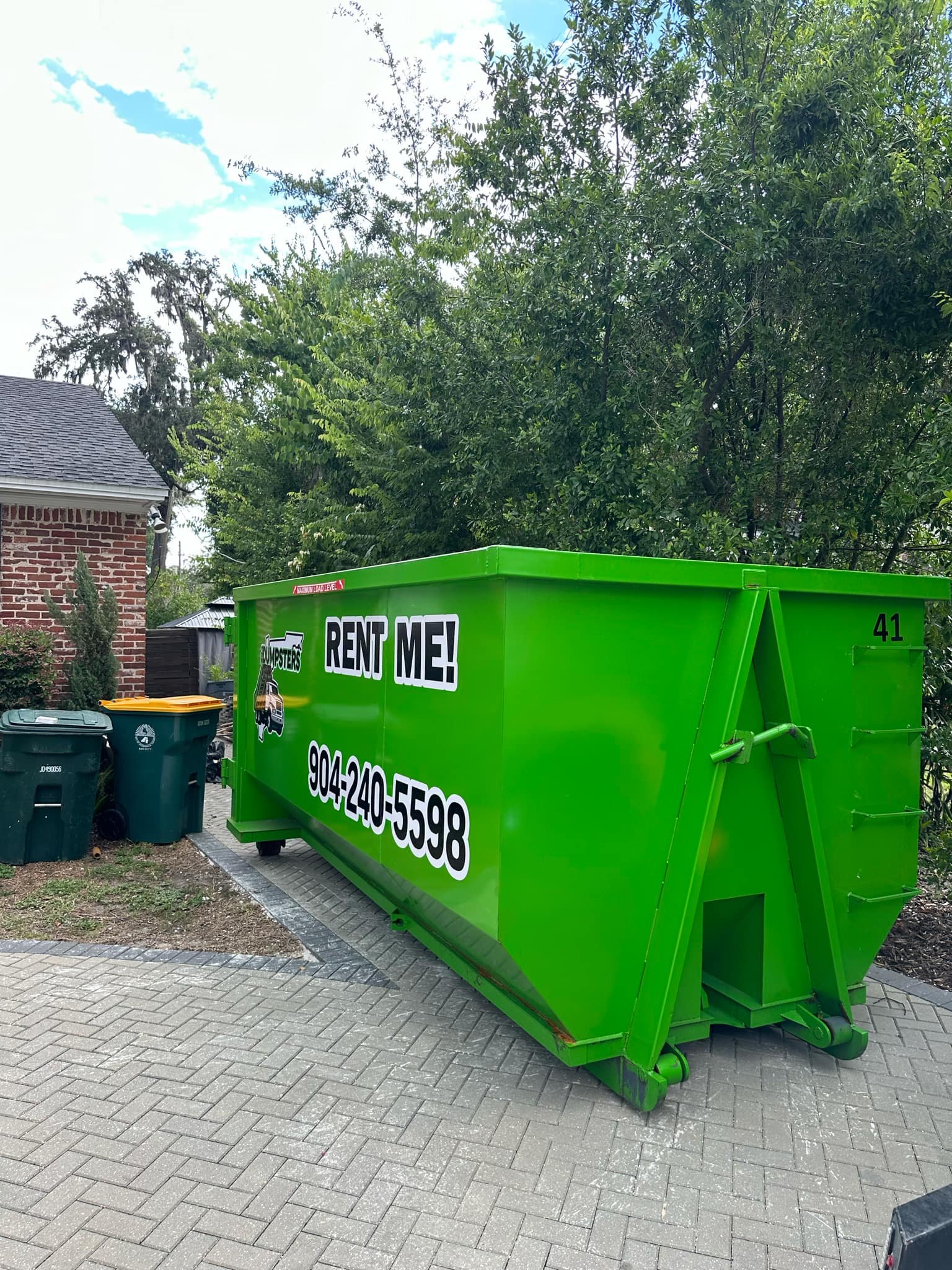
The dumpster needs to be close enough to the work area to be convenient but positioned so it does not block access for material deliveries or contractor vehicles. Most Jacksonville homeowners place the dumpster in the driveway. If your driveway is close to the porch area, even better. We can place the dumpster on grass or pavement, and we use boards underneath to protect your driveway surface.
Separate Heavy Materials
If your project involves both concrete or masonry and lighter materials like wood and screening, talk to us about the best approach. Mixing heavy concrete with general construction debris can push a dumpster over weight limits. Sometimes two smaller loads are more cost-effective than one overweight haul.
You Might Also Read
Waste Planning for Specific Porch Scenarios
Converting a Patio to a Screened Porch
If you already have a concrete patio and are adding a roof and screen enclosure above it, waste is relatively minimal. Expect old patio furniture disposal, any removed railings or planters, packaging from new materials, and wood scraps from framing. A 10-yard dumpster is usually sufficient for this type of conversion.
Tearing Down and Rebuilding an Old Screen Porch
Older screen porches in Jacksonville often have aluminum frames that have corroded in the salt air, especially in beach communities like Jacksonville Beach, Atlantic Beach, and Ponte Vedra. Tearing down an existing structure and rebuilding generates the most waste. Old framing, screening, roofing, and sometimes the flooring all need disposal. A 15-yard dumpster handles most tear-down-and-rebuild projects.
Adding a Screened Porch to a New Construction Home
New construction porches generate less demolition waste but more packaging and material scraps. Builders in growing Jacksonville communities frequently use roll-off dumpsters for the duration of the build. Our construction dumpster rental service is set up for exactly this scenario with flexible rental periods and straightforward pricing.
Items That Cannot Go in the Dumpster
Even during a screened-in porch project, certain materials require separate disposal. Paint cans with liquid paint, solvents, adhesive chemicals, and any materials containing asbestos (sometimes found in older porch ceiling tiles or siding) cannot go into a roll-off dumpster. For a full list of restricted items, read our guide on what cannot go in a dumpster.
Keeping Your Jacksonville Property Clean During the Project
A porch project can last anywhere from a few days to several weeks. During that time, having a dumpster on-site keeps debris contained and prevents it from spreading across your yard or into your neighbor's property. Jacksonville code enforcement does monitor residential properties for debris accumulation, especially in visible front-yard areas. A contained dumpster shows you are managing the project responsibly.
For homeowners in St. Augustine, Orange Park, and Fleming Island, we offer the same fast delivery and flat-rate pricing. No matter where your porch project is in Northeast Florida, we can get a dumpster to your property quickly.
How to Book a Dumpster for Your Porch Project
Getting a dumpster from 904 Dumpster is simple. Book online 24/7 or call us at (904) 240-5598. Every rental includes delivery, pickup, disposal, and a generous rental period with no hidden fees. Check our dumpster rental pricing page for current rates and availability.
Frequently Asked Questions
A typical screened-in porch conversion generates 2 to 8 cubic yards of debris, depending on whether you are enclosing an existing structure or tearing down and rebuilding. Projects that involve concrete slab removal or full roof work can produce 10 to 15 cubic yards. Our dumpster size guide can help you estimate the right container.
Most screened-in porch projects in Jacksonville fit comfortably in a 15-yard dumpster. Smaller conversions without demolition may only need a 10-yard, while large projects with concrete removal may require a 20-yard.
Yes. Old screen panels, aluminum frames, wood framing, torn screening material, and other typical porch construction debris are all accepted in our dumpsters. Metal framing may even be separated and recycled at local scrap facilities.
Plan for at least 5 to 7 days for a standard porch project. Our standard rental period covers most projects. If you need extra time, just let us know and we can extend your rental at an affordable daily rate.
In Jacksonville, no permit is needed if the dumpster sits on your private driveway or property. If it must be placed on a public street or right-of-way, a city permit may be required. Contact us and we can help you determine the best placement option.
Tags
Related Articles
What Size Dumpster Do I Need? Complete Dumpster Size Guide
The right dumpster size saves money and prevents project delays. This guide covers every common roll-off size with exact dimensions, weight allowances, and project recommendations so you pick the right fit on the first call.
Roll Off Dumpster Rental Explained for Homeowners and Contractors
Roll off dumpster rental covers sizes, pricing, delivery process, and how to choose the right container for your residential or commercial project. This guide walks through every step from booking to pickup.
Yard Drainage Solutions and Debris Removal Guide
Yard drainage projects generate significant amounts of dirt, gravel, old pipe, and landscaping debris. Understanding what waste to expect and how to dispose of it keeps your drainage project on schedule and your property clean.