
Understanding dumpster weight limits prevents overage charges and keeps your project on budget. This guide covers weight capacities for every dumpster size and tips for estimating the weight of common materials.
How Much Does a Dumpster Weigh? Weight Limits and Tonnage Guide
Weight limits are the part of dumpster rental that catches most people off guard. You order a dumpster, fill it up, and then get hit with an overage charge because the contents weighed more than expected. The truth is that volume and weight are two very different things. A 20-yard dumpster full of cardboard boxes weighs far less than the same dumpster half-filled with concrete. Understanding dumpster weight limits before you rent saves you from surprise fees and helps you choose the right container for your project. For a side-by-side comparison of dimensions, pricing, and capacity across all three sizes, see our dumpster size guide — this article goes deeper specifically on weight and tonnage.
At 904 Dumpster, a 10-year Jacksonville roll-off provider gives you a data point most brokers cannot: what these containers actually weigh in daily use across Northeast Florida, in 10, 15, and 20-yard sizes from $299.
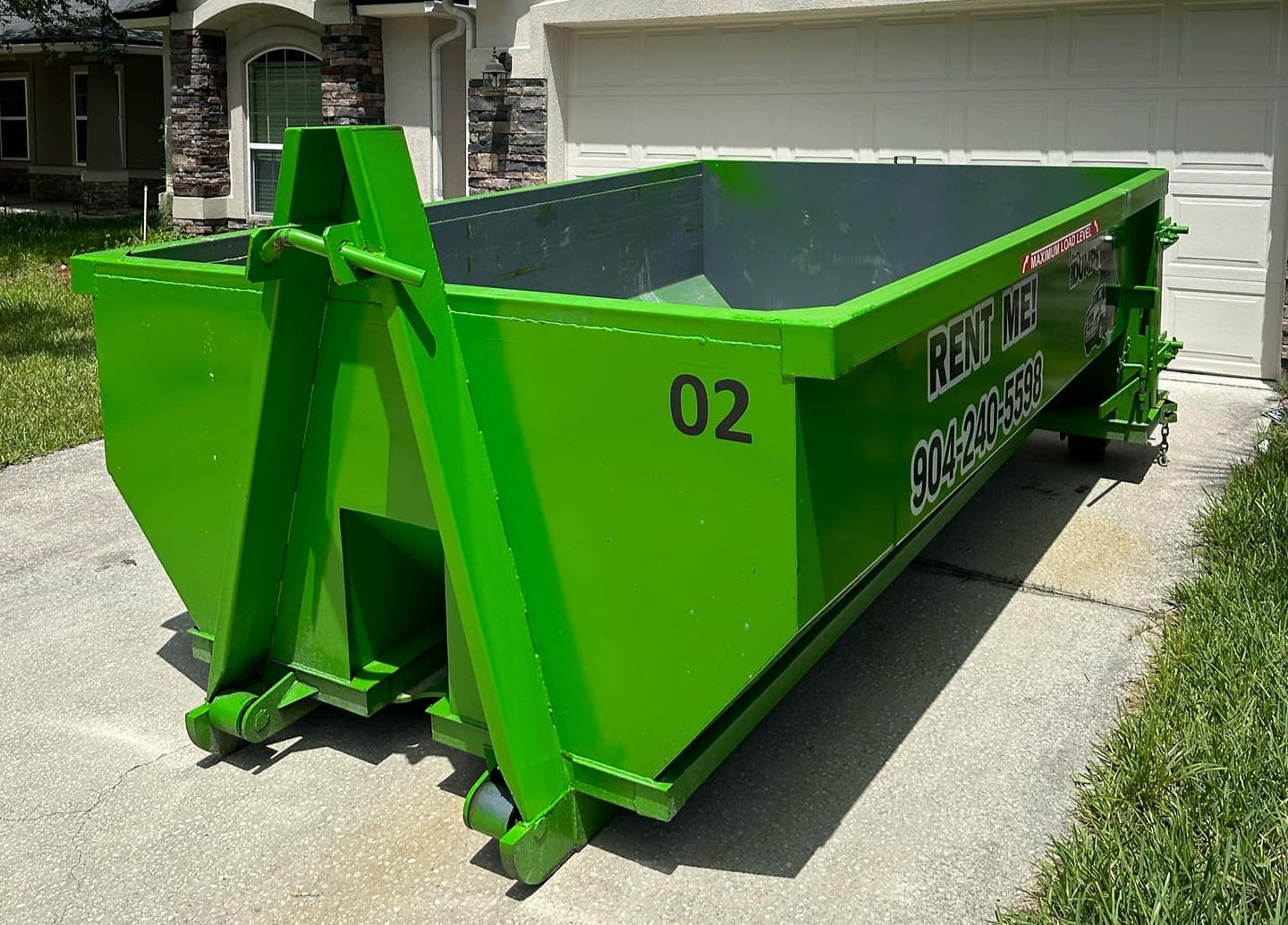
How Much Does an Empty Dumpster Weigh?
Before talking about what you can put in a dumpster, it helps to know what the container itself weighs. Empty dumpster weights vary by size and manufacturer:
| Dumpster Size | Empty Weight (Approximate) |
|---|---|
| 10-yard | 3,500 - 4,000 lbs |
| 15-yard | 4,000 - 4,800 lbs |
| 20-yard | 4,800 - 5,500 lbs |
| 30-yard | 5,500 - 6,500 lbs |
| 40-yard | 6,500 - 8,000 lbs |
These weights matter for the delivery truck and for your driveway. The combined weight of the truck, empty dumpster, and contents must stay within legal road weight limits. This is one reason why dumpster companies set weight limits per container, not because the dumpster itself cannot hold more, but because the truck hauling it has transportation limits.
Explore Our Services
Dumpster Weight Limits by Size
Every dumpster rental comes with a weight allowance included in the base price. Exceeding that limit results in overage charges, typically billed per ton over the included amount. Here is what 904 Dumpster includes with each size:
| Dumpster Size | Weight Included | Overage Rate |
|---|---|---|
| 10-yard | 1 ton (2,000 lbs) | $75 per ton (Duval County) |
| 15-yard | 1.5 tons (3,000 lbs) | $75-$100 per ton depending on county |
| 20-yard | 2 tons (4,000 lbs) | $75-$100 per ton depending on county |
904 Dumpster tops out at the 20-yard; we do not offer 30 or 40-yard containers. If you see "industry standard" weight limits elsewhere quoting higher tonnage for those sizes, that reflects other companies' equipment, not ours. We will confirm the exact weight included with your 10-yard, 15-yard, or 20-yard dumpster when you book.
How Many Cubic Feet Is Each Dumpster Size?
One cubic yard equals 27 cubic feet. A 10-yard dumpster holds 270 cubic feet, a 15-yard holds 405 cubic feet, and a 20-yard holds 540 cubic feet. These are volume figures, not weight, use the tonnage table above for weight limits.
Dumpster Sizes for Your Project
You Might Also Read
How Many Tons Does a 20-Yard Dumpster Hold?
904 Dumpster's 20-yard dumpster includes a 2-ton (4,000 pound) weight allowance. How much of that allowance you use depends on what you are loading. Here is a practical breakdown:
| Material Type | Estimated Weight per Cubic Yard | 20-Yard Dumpster Capacity |
|---|---|---|
| Household junk | 150 - 300 lbs | Fills by volume before weight |
| Wood/lumber | 300 - 500 lbs | May hit weight limit around 8-13 cubic yards for dense lumber |
| Drywall | 500 - 650 lbs | Hits weight limit at ~6-8 cubic yards |
| Asphalt shingles | 800 - 1,000 lbs | Hits weight limit at ~4-5 cubic yards |
| Concrete/brick | 2,000 - 2,400 lbs | Hits weight limit at ~1.5-2 cubic yards |
| Dirt/soil | 2,200 - 2,600 lbs | Hits weight limit at ~1.5-2 cubic yards |
The takeaway: for light materials like household junk, old furniture, and general debris, you will fill the dumpster to the brim before worrying about weight. For heavy materials like concrete, roofing shingles, or dirt, the weight limit becomes the limiting factor long before you run out of space. The EPA's research on the weight of construction and demolition debris shows why dense C&D material maxes out a container by tonnage rather than volume.
How Many Tons Does a 30-Yard Dumpster Hold?
A 30-yard dumpster holds between 5 and 7 tons depending on the rental company. These larger containers are used on commercial job sites and major construction projects where volume is the primary need. A 30-yard dumpster full of lightweight construction debris like framing lumber, drywall scraps, and packaging can weigh as little as 3 to 4 tons. Fill the same container with roofing debris and you will hit 7 tons before it looks half full.
How Many Tons Does a 40-Yard Dumpster Hold?
A 40-yard dumpster, the largest standard container, holds 6 to 8 tons. Despite its massive volume (the equivalent of about 12 pickup truck loads), the weight capacity is limited by what the haul truck can legally carry on public roads. Commercial demolition sites use 40-yard dumpsters for high-volume, relatively lightweight materials. For heavy debris, multiple smaller loads are safer and more cost-effective.
Weight of Common Project Materials
Estimating the weight of your project debris helps you choose the right dumpster and avoid overage fees. Here is a dumpster weight calculator based on common materials:
| Material | Weight per Unit | Notes |
|---|---|---|
| Asphalt shingles (1 square = 100 sq ft) | 250 - 400 lbs | 3-tab vs. architectural varies |
| Drywall (4x8 sheet, 1/2 inch) | ~57 lbs | A room generates 500-800 lbs |
| Concrete | ~4,000 lbs per cubic yard | Very heavy; fills weight fast |
| Brick | ~3,000 lbs per cubic yard | Similar to concrete |
| Clean wood | ~300-500 lbs per cubic yard | Light enough for volume loading |
| Carpet and pad | ~5-10 lbs per square yard | Medium density |
| Household furniture | Varies | Couches: 100-200 lbs each |
| Mixed household junk | ~150-300 lbs per cubic yard | Typical cleanout material |
For concrete and brick disposal, a 10-yard dumpster is often the best choice even if the volume seems small. The weight of these materials adds up quickly, and a smaller container keeps you within the weight allowance.
How to Avoid Overage Charges
Here are practical strategies to stay within your dumpster weight limit:
Weight Limits for Jacksonville Area Projects
If you are working on a project in Jacksonville, St. Augustine, Jacksonville Beach, or anywhere in Northeast Florida, we can help you choose the right dumpster size and weight capacity for your needs. Common projects in our area and their typical weight profiles include:
Ready to rent? Book your dumpster online or call (904) 240-5598. Visit our pricing page for current rates and weight allowances.
Frequently Asked Questions
904 Dumpster's 20-yard dumpster includes a weight limit of 2 tons (4,000 pounds). For household junk and general debris, you will typically fill the container by volume before reaching the weight limit. Heavy materials like concrete or roofing shingles will hit the weight limit much sooner.
An empty 10-yard dumpster weighs approximately 3,500 to 4,000 pounds. A 20-yard weighs 4,800 to 5,500 pounds. A 40-yard can weigh up to 8,000 pounds empty. The container weight is separate from your weight allowance.
Most companies charge an overage fee per additional ton, typically $50 to $100 per ton over the included weight. The dumpster is weighed at the landfill, and if it exceeds your allowance, the extra charge is added to your invoice. Choosing the right size upfront is the best way to avoid this.
Yes, dramatically. A 10-yard dumpster packed with concrete could weigh 20 to 24 tons, which would far exceed any weight limit. The same dumpster full of wood scraps might weigh 3 to 5 tons. This is why concrete, brick, and dirt loads should use a small dumpster and be loaded carefully.
Start by identifying your primary materials. Use the weight-per-cubic-yard estimates in this guide to calculate approximate totals. For mixed loads (the most common scenario for homeowners), estimate 200 to 400 pounds per cubic yard as a general average. When in doubt, call us at (904) 240-5598 for a free estimate.
Dirt and gravel are extremely heavy, approximately 2,200 to 2,600 pounds per cubic yard. Most dumpster rentals do not include dirt in their standard weight allowances. Contact us to discuss your project if you need to dispose of dirt, gravel, or fill material.
Tags
Related Articles
What Actually Fits in a 10-Yard Dumpster
A 10-yard dumpster holds about 3 pickup truck loads of debris. See real examples of what fits, from garage cleanouts to small renovations, with tips on maximizing space.
What Actually Fits in a 15-Yard Dumpster
A 15 yard dumpster holds about 5 pickup truck loads and handles most mid-range renovations. See real Jacksonville project examples and how to maximize capacity for kitchen remodels, roof tear-offs, and spring cleanouts.
How Dumpster Rental Pricing Works in 2026
Dumpster rental costs vary widely depending on size, location, and rental period. This pricing guide breaks down average costs for every dumpster size and shows you how to avoid hidden fees that inflate the final bill.