
Construction dumpster rental prices in Jacksonville depend on project type more than square footage: a 15-yard at $349 covers most roofing tear-offs and kitchen remodels, while whole-house renovations and new construction typically need the 20-yard at $399. This guide breaks down the right size and price for each project type.
Construction dumpster rental prices depend more on project type than on square footage alone, because different trades generate different weight-to-volume ratios. A roofing tear-off is dense and heavy for its size; a whole-house renovation is bulky but lighter per cubic yard. 904 Dumpster prices flat by container size from $299, but picking the right size for your specific trade is what actually controls the final cost. This guide breaks pricing down by the most common construction project types in Jacksonville.
How Much Does a Construction Dumpster Cost for a Roofing Project?
Roofing debris is one of the densest materials a dumpster ever holds. A single layer of asphalt shingles weighs roughly 250 to 400 pounds per 100 square feet (one "square"), which means a modest 2,000 square-foot roof can generate 2 to 3 tons of debris well before the container looks full. The 15-yard dumpster at $349, with its 1.5-ton weight allowance, covers roofs up to about 20 to 25 squares. Larger roofs or multi-layer tear-offs need the 20-yard at $399 and its 2-ton allowance. See our roofing waste management guide for a full weight breakdown by roofing material.
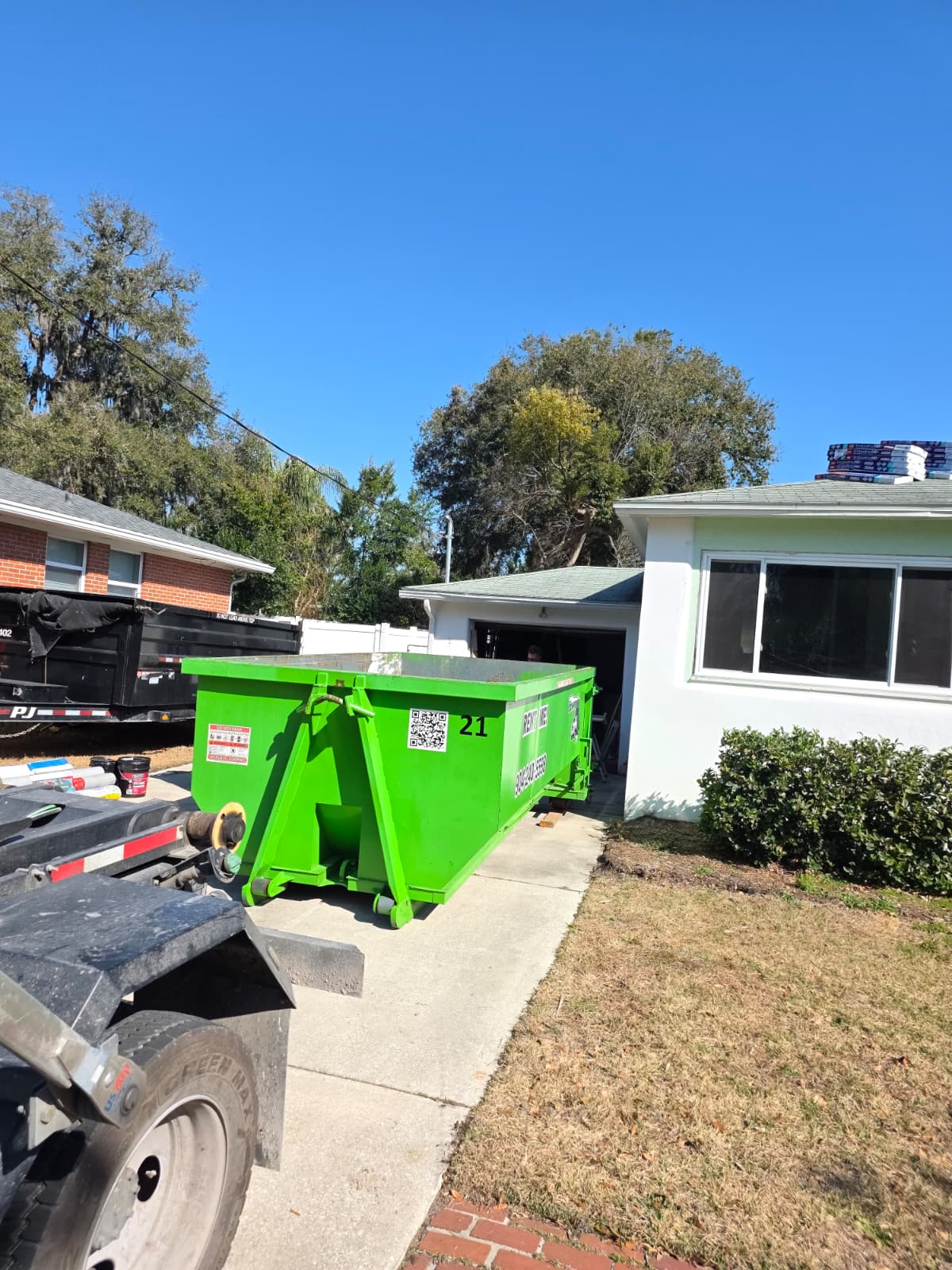
Kitchen Remodels
Kitchen renovation debris (cabinets, countertops, flooring, drywall, and old appliances) is bulkier and lighter per cubic yard than roofing material, which shifts the sizing math toward volume rather than weight. Most kitchen remodels fit comfortably in the 15-yard at $349, with the 1.5-ton allowance rarely becoming the binding constraint unless the project includes a concrete countertop or full tile flooring tear-out. See our kitchen renovation debris guide for a room-by-room volume estimate.
Explore Our Services
Flooring-Only and Cosmetic Projects
Projects limited to flooring removal, painting, or trim work generate the lightest debris-to-volume ratio on this list, since old carpet, laminate, and paint cans are bulky more than heavy. The 10-yard at $299 covers most single-room flooring tear-outs and whole-house cosmetic refreshes, with weight rarely the limiting factor unless the flooring being removed is tile or hardwood over a large area.
Bathroom Remodels
Bathroom renovation debris (tile, a cast-iron or fiberglass tub, a vanity, drywall, and old fixtures) covers less total volume than a kitchen but runs denser per cubic foot, since tile and porcelain fixtures weigh more than cabinetry does. Most single-bathroom remodels fit comfortably in the 10-yard at $299, though a full gut involving a cast-iron tub or a large tile floor can push the load close to the 1-ton weight allowance. See our bathroom renovation waste guide for fixture-by-fixture weight estimates.
You Might Also Read
Demolition Projects
Demolition, whether a single interior wall, an outbuilding, or a full structure teardown, generates the heaviest debris-to-volume ratio of any construction project because it includes structural material: framing lumber, concrete footings, brick, and often drywall or plaster still attached to studs. A partial interior demo (removing walls or flooring in one area) usually fits the 15-yard, but a full structure or garage demolition typically needs the 20-yard, and jobs involving concrete slab or foundation removal may need a dedicated heavy-material container rather than a standard debris box. See our demolition debris disposal guide for how to separate load types before the container fills.
Whole-House Renovations
Combining kitchen, bathroom, and flooring work across an entire house pushes most projects into the 20-yard at $399, both for the volume (multiple rooms of debris at once) and because whole-house jobs often mix in denser materials like tile and drywall that add up faster than furniture alone. For larger renovations exceeding a single 20-yard's capacity, a swap-out (the container emptied and returned) is usually more cost-effective than upgrading to an oversized container; see our monthly and long-term rental guide for how swap-out pricing compares.
New Construction and Additions
New construction and room additions generate a mix of lumber, packaging, drywall scrap, and installation waste that is generally lighter per cubic yard than a demolition project, since there is no existing structure being torn out. Most additions and small new builds fit the 20-yard, and multi-phase builds (foundation, framing, finish work) often use a swap-out schedule across the project timeline rather than one long-sitting container.
Construction Dumpster Pricing Summary by Project
| Project Type | Recommended Size | Price | Key Constraint |
|---|---|---|---|
| Roofing tear-off (up to 20-25 squares) | 15-yard | $349 | Weight (1.5 tons) |
| Roofing tear-off (larger/multi-layer) | 20-yard | $399 | Weight (2 tons) |
| Kitchen remodel | 15-yard | $349 | Volume |
| Bathroom remodel | 10-yard | $299 | Weight (tile, fixtures) |
| Interior demolition (partial) | 15-yard | $349 | Weight (structural material) |
| Full structure demolition | 20-yard | $399 | Weight (concrete, structural) |
| Whole-house renovation | 20-yard | $399 | Volume and weight |
| New construction / addition | 20-yard | $399 | Volume, multi-phase |
Prices shown are Duval County rates; St. Johns, Clay, and Nassau counties run slightly higher (see the pricing guide for exact county rates). All prices include delivery, pickup, and disposal.
Avoiding Overage Charges on Dense Materials
For any project involving concrete, brick, tile, or roofing material, confirming the weight allowance against your estimated debris weight before booking is the single biggest lever on final cost. The EPA's construction and demolition debris guidance recommends separating denser materials (concrete, masonry) into their own load when possible, since mixing them with lighter debris makes it harder to estimate total weight accurately until the container is already on-site.
Frequently Asked Questions
For a roof up to about 20 to 25 squares, the 15-yard at $349 usually covers it within the 1.5-ton weight allowance. Larger or multi-layer tear-offs typically need the 20-yard at $399. A modest 2,000 square-foot roof generates roughly 2 to 3 tons of shingle debris, which is why weight, not volume, usually decides the size.
The 15-yard at $349 covers most kitchen remodels, including cabinets, countertops, and flooring, since kitchen debris is generally bulkier than it is heavy. If the project also includes a concrete countertop or full tile tear-out, sizing up to the 20-yard at $399 avoids a weight overage.
Yes, proportionally, but the per-cubic-yard cost improves with the larger 20-yard container. A whole-house job typically needs the 20-yard at $399, which is only $50 more than the 15-yard despite offering 5 additional cubic yards and 0.5 additional tons of capacity.
904 Dumpster's published flat rates apply to both, but contractors with recurring or multi-project needs can set up a standing account with volume pricing. See our contractor dumpster guide for details. Standing accounts also get priority scheduling and simplified billing, which matters on job sites running back-to-back phases.
Concrete, brick, tile, and roofing shingles are the densest common construction materials and the most likely to trigger a weight-overage charge before the container appears full. Separating these materials into their own load, rather than mixing them with lighter debris, makes it easier to estimate total weight before booking.
Related Resources
Tags
Related Articles
Construction Dumpster Rental Guide for Working Contractors
A contractor guide to construction dumpster rental covering site dumpster sizes, construction waste container options, cost planning, and efficient debris management for Jacksonville job sites.
Managing Roofing Project Waste for Contractors and Homeowners
Roofing debris is one of the heaviest materials contractors and homeowners deal with. Proper waste management keeps your project safe and on schedule.
Kitchen Renovation Debris and How to Dispose of It Safely
Kitchen renovations generate more debris than most homeowners expect. From cabinets and countertops to flooring and appliances, here is everything you need to know about managing kitchen renovation waste.