
Bathroom renovations generate a surprising amount of heavy debris. Learn what waste to expect, which dumpster size fits your remodel, and how to dispose of tile, fixtures, and vanities properly.
How to Handle Bathroom Renovation Waste and Debris
Whether you are tackling a DIY bathroom remodel or a full contractor-led renovation, the project generates between 500 and 2,000 pounds of debris. 904 Dumpster recommends a 10-yard dumpster for most single-bathroom remodels, while a 15-yard is the safer choice if you are gutting the entire room down to the studs. Knowing what waste to expect and how to dispose of it properly saves you time, money, and the headache of multiple dump runs.
Bathroom remodels are one of the most popular home improvement projects in Jacksonville, FL. Whether you are updating a guest bathroom in your San Marco bungalow, gutting the master bath in a Mandarin home, or renovating rental property bathrooms in the Arlington or Westside neighborhoods, the debris adds up quickly. Tile, cement board, vanities, toilets, tubs, and plumbing fixtures are heavy and bulky, and your regular trash pickup will not touch any of it.
Types of Bathroom Renovation Debris
Understanding what you will need to dispose of helps you choose the right dumpster size and avoid prohibited items.
Demolition Materials
| Material | Average Weight | Notes |
|---|---|---|
| Ceramic floor tile (per 50 sq ft) | 250-400 lbs | Includes mortar/thinset underneath |
| Cement backer board (per 50 sq ft) | 150-200 lbs | Heavy, breaks into sharp pieces |
| Drywall (per 50 sq ft) | 80-100 lbs | May be heavier if water-damaged |
| Cast iron bathtub | 250-400 lbs | Extremely heavy, may need help loading |
| Fiberglass tub/shower | 60-100 lbs | Light but bulky |
| Porcelain toilet | 60-100 lbs | Drain completely before moving |
| Vanity with countertop | 50-150 lbs | Granite or marble tops are heaviest |
| Medicine cabinet | 15-30 lbs | Remove mirror separately |
Plumbing and Fixtures
Old faucets, showerheads, drain assemblies, and supply lines can typically go right in the dumpster. If you have copper pipes being replaced, consider setting those aside for scrap recycling. A few feet of copper pipe can be worth $5 to $15 at Jacksonville scrap yards like SA Recycling on Talleyrand Avenue or Trademark Metals on East 8th Street.
Hazardous Materials to Watch For
Older Jacksonville homes, especially those built before 1980 in neighborhoods like Avondale (32205), San Marco (32207), Ortega (32210), and Murray Hill (32205), may contain hazardous materials in the bathroom:
For a complete list of items that cannot go in a dumpster, read our prohibited items guide.
Explore Our Services
Choosing the Right Dumpster Size for Your Bathroom Remodel
The right dumpster size depends on whether you are doing a cosmetic refresh or a full gut renovation.
Cosmetic Refresh (Fixtures, Paint, Accessories)
Project includes: Replacing the toilet, vanity, mirror, and light fixtures. Painting walls. Swapping hardware.
Debris generated: 200-500 lbs
Recommended: 10-yard dumpster ($299) - This is more than enough for a cosmetic update. You will have room to spare for packing materials from new fixtures.
Standard Remodel (Fixtures + Tile + Vanity)
Project includes: Everything above plus removing and replacing floor tile, wall tile in the shower area, and possibly the tub or shower surround.
Debris generated: 800-1,500 lbs
Recommended: 10-yard dumpster ($299) for a small bathroom or 15-yard dumpster ($349) for a standard or master bathroom. The 15-yard gives you a comfortable margin for the heavy tile and mortar.
Full Gut Renovation (Down to Studs)
Project includes: Removing everything: tile, drywall, cement board, tub, toilet, vanity, plumbing fixtures, subfloor, and possibly the subfloor itself.
Debris generated: 1,500-3,000 lbs
Recommended: 15-yard dumpster ($349) for a single bathroom or 20-yard dumpster ($399) if you are gutting multiple bathrooms or doing a master suite renovation. Check out our dumpster size guide for visual comparisons.
Multi-Bathroom Renovation
If you are renovating two or more bathrooms simultaneously, which is common when flipping houses in Jacksonville's active real estate market, go with a 20-yard dumpster. Contractors working on multi-unit properties in Jacksonville can also ask about our commercial dumpster rental options with scheduled swaps.
"Great company to work with. Professional, on time, and best price in Jax"
- Velibor Ivanic, Google Review
Step-by-Step Bathroom Demolition and Disposal
Step 1 - Prepare the Work Area
Before swinging a hammer, protect the rest of your home:
Step 2 - Remove Fixtures First
Start with the easy, lightweight items before moving to demolition:
Step 3 - Demolish Tile and Walls
This is where most of the debris is generated:
Step 4 - Remove the Tub or Shower
Step 5 - Load the Dumpster Efficiently
Loading strategy matters, especially with heavy bathroom debris:
"Great, reliable dumpster service! Always on time with delivery and pickup, fair pricing, and excellent communication."
- Redi Tufa, Google Review
You Might Also Read
Cost Breakdown for Bathroom Renovation Disposal
Here is what disposal typically costs for a bathroom renovation in the Jacksonville area:
| Disposal Method | Cost | Notes |
|---|---|---|
| 904 Dumpster (10-yard) | $299 | Best for cosmetic remodels |
| 904 Dumpster (15-yard) | $349 | Best for standard remodels |
| 904 Dumpster (20-yard) | $399 | Best for full gut or multi-bath |
| DIY dump runs (per trip) | $50-$80 | Trail Ridge Landfill tipping fees + gas + time |
| Junk removal service | $300-$600 | They load, but you pay per volume |
| Contractor markup | 15-25% | Some GCs mark up disposal as part of their bid |
Renting a dumpster directly is almost always cheaper than having your contractor handle disposal, and it is far more convenient than making multiple trips to the landfill in a pickup truck. Book a dumpster online or call (904) 240-5598 for same-day delivery.
Jacksonville-Specific Tips for Bathroom Renovations
Humidity and Mold Prevention
Jacksonville's average humidity hovers around 74%, which means your new bathroom needs proper ventilation. When installing new drywall, use moisture-resistant green board or cement board in wet areas. A good exhaust fan rated at 80+ CFM is not optional in Northeast Florida; it is essential.
Older Home Considerations
Many homes in established Jacksonville neighborhoods like San Marco (32207), Avondale (32205), Riverside (32204), Springfield (32206), and Murray Hill (32205) were built in the 1920s through 1960s. These bathrooms often have:
Contractor vs. DIY in Jacksonville
A standard bathroom renovation in Jacksonville typically costs $8,000 to $25,000 with a contractor. DIY homeowners can save 40-60% on labor but should be realistic about plumbing and electrical work, which requires permits in Duval County. The demolition and debris removal are the easiest parts to DIY, even if you hire out the skilled trades.
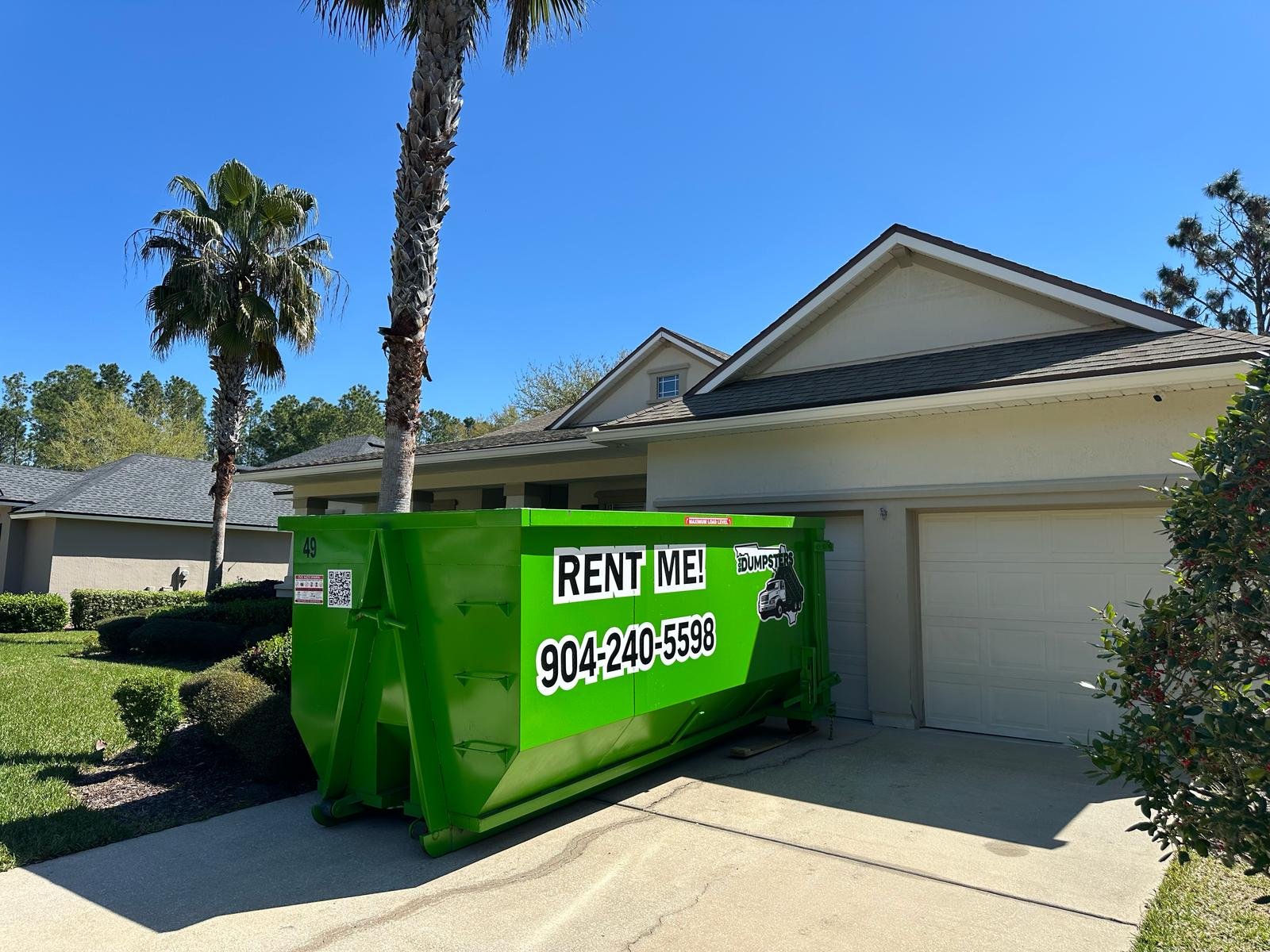
If you are handling demolition yourself, our residential dumpster rental service is designed for homeowners. We deliver the dumpster to your driveway, you fill it at your own pace during your 5-day rental, and we pick it up when you are done.
Frequently Asked Questions
A 10-yard dumpster handles most single-bathroom cosmetic remodels including fixture and vanity replacement. For a full gut renovation with tile removal, a 15-yard dumpster is the better choice. Multi-bathroom projects or master suite renovations should consider a 20-yard dumpster. Our dumpster size guide has visual examples to help you decide.
Yes. Fiberglass, acrylic, steel, and cast iron bathtubs can all go in a roll-off dumpster. Cut fiberglass tubs into sections with a reciprocating saw for easier loading. Cast iron tubs are extremely heavy at 300-400 pounds, so have a helper or break them into pieces first.
Tile and mortar go directly into the dumpster. Be aware that tile with the mortar bed attached is very heavy, often 5-8 lbs per square foot. A 50-square-foot shower with floor and three walls of tile can generate 300-500 lbs of debris. Load tile toward the center and bottom of the dumpster to distribute weight.
Yes. Toilets are accepted in roll-off dumpsters. Drain the toilet completely before removing it by turning off the water supply, flushing, and using a sponge or wet-vac to remove remaining water from the bowl and tank. This prevents water from leaking into the dumpster and adding unnecessary weight.
A typical full-gut bathroom renovation generates 1,000 to 2,500 lbs of debris. The heaviest components are floor and wall tile with mortar (300-500 lbs), the bathtub (60-400 lbs depending on material), and cement backer board (150-200 lbs). Drywall adds another 80-100 lbs per 50 square feet.
Related Resources
Tags
Related Articles
Kitchen Renovation Debris and How to Dispose of It Safely
Kitchen renovations generate more debris than most homeowners expect. From cabinets and countertops to flooring and appliances, here is everything you need to know about managing kitchen renovation waste.
What Size Dumpster Do I Need? Complete Dumpster Size Guide
The right dumpster size saves money and prevents project delays. This guide covers every common roll-off size with exact dimensions, weight allowances, and project recommendations so you pick the right fit on the first call.
Yard Drainage Solutions and Debris Removal Guide
Yard drainage projects generate significant amounts of dirt, gravel, old pipe, and landscaping debris. Understanding what waste to expect and how to dispose of it keeps your drainage project on schedule and your property clean.