
Yes, you can put concrete in a dumpster, but weight is the limit, not space. Solid concrete weighs about 4,000 pounds per cubic yard, so the 1 to 2 tons included with a standard roll-off fills with only 0.5 to 1 cubic yard. In Duval County, extra weight is billed at $75 per ton.
Yes, you can put concrete in a dumpster, and 904 Dumpster offers a dedicated concrete disposal dumpster for exactly that job. The catch is weight. Solid concrete weighs about 4,000 pounds per cubic yard, so a roll-off that looks mostly empty can already be at its tonnage limit.
So when people ask can you put concrete in a dumpster, the honest answer is yes, within a weight budget. This guide does the math for each container size, shows how a mixed load goes overweight, and explains when a concrete-only container is the better choice.
Why Weight Decides Everything With Concrete
A dumpster has two limits: the volume of the box and the weight the truck can legally carry. For household junk, volume runs out first. For concrete, weight runs out first, and it is not close.
Solid concrete weighs roughly 4,000 pounds (2 tons) per cubic yard. A cubic yard of mixed renovation debris, such as drywall, lumber, and furniture, weighs about 200 to 300 pounds. That is a gap of roughly 13 to 20 times. A 10 yard container filled to the brim with household items might weigh 1 to 1.5 tons. The same container filled with broken slab would weigh 20 tons, far beyond what any truck can lift or any road allows.
That is why concrete is loaded low in the container instead of piled to the rim. The 4,000 pound figure is the planning number 904 Dumpster uses for solid concrete, and the Wikipedia entry on concrete explains the material itself. Actual weight varies with the mix and any reinforcement.
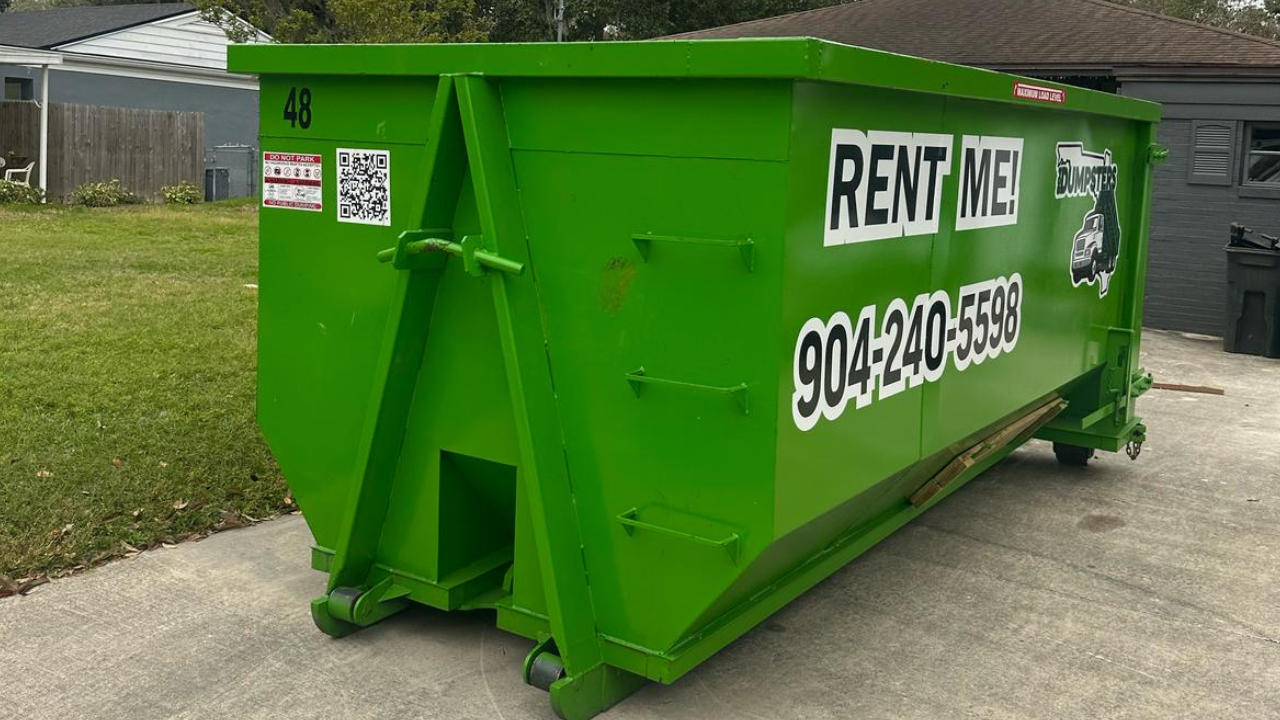
How Much Concrete Can a Dumpster Hold?
A dumpster holds as much concrete as its included tonnage allows, which is 0.5 to 1 cubic yard of solid concrete for the standard sizes. The container's visual capacity is not the measure. At 4,000 pounds per cubic yard, each included ton covers half a cubic yard.
Here is the math for the three sizes 904 Dumpster rents in Duval County:
| Container | Price | Included Weight | Solid Concrete at Included Weight | Share of Box Volume |
|---|---|---|---|---|
| 10 yard | $299 (3 days) | 1 ton (2,000 lb) | 0.5 cubic yard | 5% |
| 15 yard | $349 (5 days) | 1.5 tons (3,000 lb) | 0.75 cubic yard | 5% |
| 20 yard | $399 (5 days) | 2 tons (4,000 lb) | 1 cubic yard | 5% |
In every case, the included tonnage is used up by about 5 percent of the box. Think of a standard mixed-debris roll-off as a container built for bulk, not density. Going over is not forbidden. In Duval County, overage is billed at $75 per ton ($100 per ton in Clay, St. Johns, and Nassau counties), measured from the scale ticket at Trail Ridge Landfill, and there are no fuel or environmental fees added on top.
The extra-ton rate also converts to a simple rule of thumb: in Duval County, every additional $75 buys the disposal of another half cubic yard of solid concrete.
Explore Our Services
What Does a Typical Concrete Job Weigh?
Most homeowners underestimate slab weight because thickness is hard to judge by eye. To estimate, multiply length by width by thickness (all in feet) to get cubic feet, divide by 27 for cubic yards, then multiply by 2 tons.
| Project | Size and Thickness | Volume | Approx. Weight |
|---|---|---|---|
| Small walkway | 3 ft x 20 ft x 4 in | 0.74 cubic yard | 1.5 tons |
| Patio slab | 10 ft x 10 ft x 4 in | 1.23 cubic yards | 2.5 tons |
| Single-car driveway apron | 12 ft x 20 ft x 4 in | 2.96 cubic yards | 5.9 tons |
| Garage floor | 20 ft x 20 ft x 4 in | 4.94 cubic yards | 9.9 tons |
Those are estimates for plain 4 inch slabs. Thicker pours, footings, and reinforced sections weigh more. For a second opinion on volume math, the debris volume calculator guide walks through the same method for other materials.
A 10 foot by 10 foot patio, for example, is about 2.5 tons. Against a 10 yard container with 1 ton included, that is roughly 1.5 tons over, or around $110 in overage. The same patio in a 20 yard container with 2 tons included lands about half a ton over, around $38. These are planning figures. The final charge comes from the scale ticket.
Why Mixed Loads Go Overweight
The most common overage story is not a customer who loaded only concrete. It is a customer who added concrete to a regular cleanout and did not account for the weight.
Take a 15 yard container with 1.5 tons included. Load 1.5 cubic yards of broken patio (3 tons) and 8 cubic yards of old fencing, carpet, and drywall at about 250 pounds per cubic yard (1 ton). The container is only about 63 percent full by volume, yet it weighs 4 tons. That is 2.5 tons over, or about $187.50 in overage.
Mixing also removes options. Pure concrete can be routed to a recycling crusher, but a load that contains wood, drywall, or trash contaminates the aggregate and usually cannot be. Keeping materials separate is cheaper in two ways: it avoids paying landfill rates for heavy material and it keeps the concrete eligible for recycling.
You Might Also Read
Should You Rent a Dedicated Concrete Roll-Off?
Rent a dedicated concrete roll-off when the concrete is more than a small share of the project, usually anything past about half a cubic yard. A concrete dumpster is a standard roll-off loaded with concrete-only material, with weight allowances sized for that density.
904 Dumpster's concrete disposal dumpster starts at $350 and includes delivery, pickup, a 5-day rental, and up to 2 tons. Overage above that is billed at $75 per ton in Duval County and $100 per ton in the other counties. The service page recommends loading concrete containers no more than halfway by visual height, because weight, not space, is the limit. Call (904) 240-5598 with your dimensions and we will tell you which size matches the tonnage.
A dedicated container makes sense in these cases:
A standard dumpster is fine for a few broken pavers, a cracked step, or one or two bags of hardened mix inside a larger cleanout. For those small amounts, check the weight math above and plan for a possible half ton of overage. If you are unsure whether your project needs one container or two, the heavy debris disposal guide covers bricks, block, and stone as well.
Can You Put Rebar, Dirt, or Wet Concrete in the Same Dumpster?
Rebar-reinforced concrete can go in a concrete dumpster, and the service page confirms rebar is acceptable for recycling loads. Dirt, brick, masonry, and stone are also treated as clean heavy material. Mixing in drywall, wood, or general trash is what disqualifies a load from recycling.
Wet or uncured concrete is a different problem. It hardens into the container and adds weight you cannot predict. If you have leftover mix, let it cure in a shallow form first and then break it up. Call (904) 240-5598 if you are unsure about a particular material before loading it.
Planning Your Concrete Load
The short version of can you put concrete in a dumpster is to treat tonnage as the budget and volume as an afterthought. Break slabs into pieces of roughly 12 to 18 inches so they pack flat on the floor of the container. Load the heaviest pieces first and keep them low and evenly spread, not piled against one wall. Do not exceed the fill line your driver gives you at delivery.
Need help picking a size? Compare the three options on the dumpster size guide, or see how included tonnage works across sizes. When you are ready to schedule, the concrete dumpster page has current pricing and booking.
Concrete Disposal in Jacksonville and Northeast Florida
Neighbors in Jacksonville ask can you put concrete in a dumpster every time a driveway comes up, and the answer is the same across Duval County. Concrete work here is steady year-round. Driveway replacements in Mandarin and Southside, patio tear-outs in Orange Park, and foundation work around the I-95 and I-295 corridor all generate the same heavy debris. 904 Dumpster has been locally owned since 2016 and delivers from 2797 Anniston Rd, with same-day delivery on orders placed before noon Monday through Saturday. Loaded containers go to Trail Ridge Landfill unless the load qualifies for recycling. Private driveway placement does not need a permit, but a street placement does. Pricing in Clay, St. Johns, and Nassau counties differs from Duval County, so confirm your address when you book. The Florida DEP waste program is the state resource for recycling and disposal rules.
Frequently Asked Questions
Yes, a regular roll-off accepts concrete, but its included weight (1 to 2 tons) is used up by only 0.5 to 1 cubic yard of solid concrete. Anything beyond that is billed at $75 per ton in Duval County ($100 elsewhere). For loads over about 1 cubic yard, a dedicated concrete container is usually the better value.
A cubic yard of solid concrete weighs about 4,000 pounds, or 2 tons. Brick runs closer to 3,000 pounds per cubic yard, while mixed household debris is only 200 to 300 pounds. This density gap is why concrete fills a dumpster's weight allowance long before it fills the box.
Weight is measured at Trail Ridge Landfill and any tonnage above the included amount is billed at $75 per ton in Duval County and $100 per ton in the other counties. There are no fuel or environmental fees added. Load low and call (904) 240-5598 if you are unsure whether your load will stay near the included weight.
Multiply length, width, and thickness in feet to get cubic feet, divide by 27 for cubic yards, then multiply by 2 tons. A 10 foot by 10 foot patio at 4 inches thick is about 1.23 cubic yards, or roughly 2.5 tons. Measure thickness at a broken edge for accuracy.
Ready to book a container for your concrete? Call (904) 240-5598 or reserve online.
Related Resources
Tags
Related Articles
How to Dispose of Concrete, Bricks, and Heavy Debris
Concrete, bricks, and cinder blocks are some of the heaviest materials to dispose of. This guide covers disposal methods, recycling options, cost estimates, and the right dumpster size for heavy debris projects.
How Much Does a Dumpster Weigh? Weight Limits and Tonnage Guide
Understanding dumpster weight limits prevents overage charges and keeps your project on budget. This guide covers weight capacities for every dumpster size and tips for estimating the weight of common materials.
What Size Dumpster Do I Need? Complete Dumpster Size Guide
The right dumpster size saves money and prevents project delays. This guide covers every common roll-off size with exact dimensions, weight allowances, and project recommendations so you pick the right fit on the first call.