
The 10-yard dumpster costs $299 and holds 10 cubic yards and 1 ton of debris, suited to single-room projects, while the 20-yard costs $399 and holds 20 cubic yards and 2 tons, suited to whole-house renovations. This guide breaks down which size fits which Jacksonville project, including the cost-per-yard math behind the decision.
The 10-yard and 20-yard are the two most-booked dumpster sizes for dumpster rental in Jacksonville, FL, and the decision between them comes down to project scope more than yard size or square footage. The 10-yard runs $299 for small, contained jobs. The 20-yard runs $399 for anything spanning multiple rooms or involving construction debris. This guide walks through the real-world projects that land on each side of that line.
What Is the Difference Between a 10-Yard and 20-Yard Dumpster?
| Spec | 10-Yard | 20-Yard |
|---|---|---|
| Price | $299 | $399 |
| Length | 12 feet | 14 feet |
| Width | 7.5 feet | 7.5 feet |
| Height | 3.6 feet | 5.8 feet |
| Weight included | 1 ton | 2 tons |
| Rental period | 3 days | 5 days |
| Truck loads equivalent | About 3 | About 6 to 8 |
The width is identical and the length is close, so the driveway footprint barely changes between the two. Nearly all of the 20-yard's extra volume comes from taller walls, 2.2 feet taller than the 10-yard, not a bigger footprint.
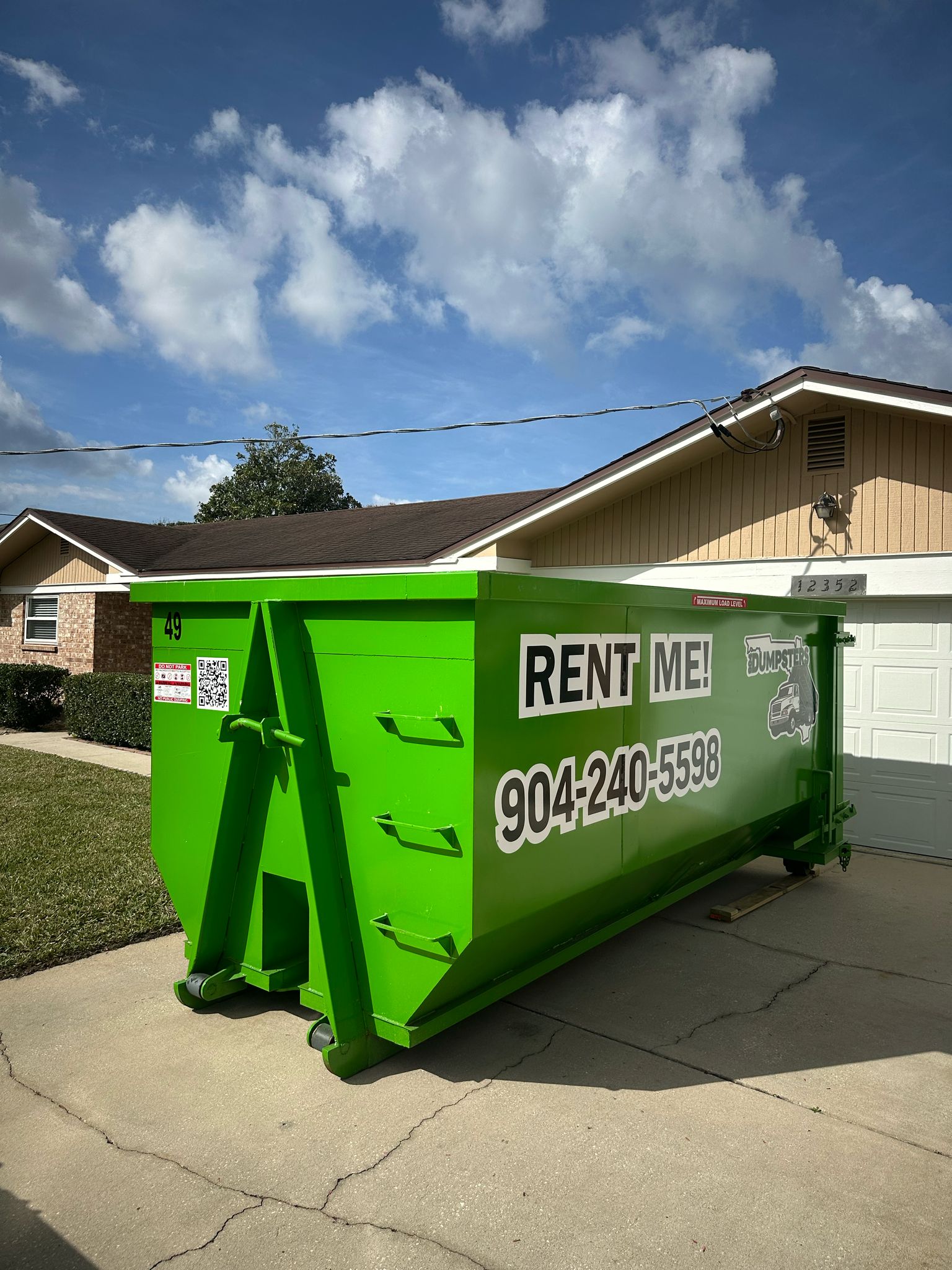
Projects That Only Need the 10-Yard
A single garage cleanout, a one-bedroom apartment move-out, a small bathroom refresh (fixtures and flooring, not a full gut), a deck or shed tear-down, and general yard debris from a weekend cleanup all fit comfortably in the 10-yard's 10 cubic yards and 1-ton allowance. Booking the 20-yard for any of these means paying $100 more for capacity that goes unused.
Explore Our Services
Projects That Need the 20-Yard
Whole-house renovations, combined kitchen and bathroom remodels, roofing tear-offs on a mid-size home, multi-room estate cleanouts, and any construction-grade debris load (drywall, cabinets, flooring across multiple rooms) generally exceed the 10-yard's capacity fast. The 20-yard's extra 10 cubic yards and additional ton of weight allowance is the difference between one container lasting the whole project and needing a second delivery mid-job.
The Cost-per-Yard Math
At $299 for 10 cubic yards, the 10-yard works out to about $30 per cubic yard. At $399 for 20 cubic yards, the 20-yard works out to about $20 per cubic yard, a better rate, but only if the project actually uses the extra 10 yards. Booking the bigger container "just in case" for a project that only fills a 10-yard means paying more per yard used, not less.
You Might Also Read
Weight Is the Other Deciding Factor
Volume is not the only constraint. A 10-yard's 1-ton weight allowance is easy to exceed with dense material (concrete, roofing shingles, wet debris after a storm) well before the container looks full. If your project includes any of those materials even in a small footprint, the 20-yard's 2-ton allowance provides useful headroom, independent of how much visual space the material takes up. See our dumpster weight limits guide for tonnage by material type.
Quick Decision Table
| Project | Size |
|---|---|
| Garage or single-room cleanout | 10-yard |
| Small bathroom refresh | 10-yard |
| Apartment move-out (1 bedroom) | 10-yard |
| Kitchen and bath combined remodel | 20-yard |
| Roofing tear-off (mid-size home) | 20-yard |
| Whole-house renovation | 20-yard |
| Multi-room estate cleanout | 20-yard |
For a project that seems to fall right on the line, sizing up to the 20-yard is usually the safer $100 bet over ordering a second 10-yard delivery mid-project, which costs more in total and disrupts the job.
Does Loading Technique Change Which Size You Need?
Careless loading, tossing bulky items in at odd angles instead of breaking them down, wastes a larger share of a 10-yard's smaller volume than it does on a 20-yard, since there is less room to begin with for the same wasted air gaps. A well-loaded 10-yard, flattened boxes, broken-down furniture, flat materials stacked rather than tossed, can sometimes handle a project that would otherwise have pushed toward the 15-yard. This matters most on borderline projects where the choice between sizes is close either way.
Why the Rental Period Differs Between the Two
The 10-yard's shorter 3-day rental period reflects its typical use case: smaller, faster projects that do not need a full workweek to load. The 20-yard's 5-day period matches larger renovations where demo, sorting, and hauling happen across several days rather than one afternoon. If a small project genuinely needs more than 3 days, extensions are available at $15 per day, but projects that consistently need the longer window are often a sign the 15 or 20-yard, with its built-in 5-day period, is the more cost-effective size to begin with.
Where the 15-Yard Fits Between Them
Jumping straight from the 10-yard to the 20-yard skips a real middle option. The 15-yard sits almost exactly between the two on both price ($349) and capacity (15 cubic yards, 1.5 tons), and shares the 20-yard's 14-foot length and 7.5-foot width, just with 1.3 feet less wall height. For projects that clearly exceed a single room but stop short of a full renovation, a kitchen or bathroom gut, a roofing tear-off under about 30 squares, the 15-yard is often the better fit than jumping straight to the largest size out of caution.
Same Footprint, Different Capacity
Because the 10-yard, 15-yard, and 20-yard share the same 7.5-foot width and nearly the same length, the decision between them almost never comes down to whether a container physically fits your driveway. It comes down to how much debris you actually expect to generate. If your driveway fits one size, it fits all three; use the project scope, not the parking space, to make the call.
Frequently Asked Questions
The 10-yard holds 10 cubic yards and 1 ton of debris for $299, suited to single-room projects. The 20-yard holds 20 cubic yards and 2 tons for $399, suited to whole-house renovations and multi-room projects. The rental period is 3 days for the 10-yard and 5 days for the 20-yard, with $15 per day for extensions.
Most kitchen remodels alone fit the 15-yard, but if the project also includes a bathroom or additional flooring work, the 20-yard is the safer choice given the added volume from multiple rooms. Kitchen debris tends to be bulky rather than heavy, so volume, not weight, usually decides the right size.
Per cubic yard, yes: about $20 per yard versus $30 per yard for the 10-yard. That value only holds if the project uses close to the full 20 cubic yards; smaller projects still cost less overall with the 10-yard. The $100 price gap is worth it once a project is likely to exceed 15 cubic yards.
Only for very small roofs, because roofing shingles are dense and hit the 1-ton weight limit quickly. Most roofing tear-offs need at least the 15-yard or the 20-yard depending on square footage. A single layer of asphalt shingles alone can weigh 250 to 400 pounds per 100 square feet, which adds up fast.
You would need a second delivery, which costs more in total than booking the 20-yard upfront for a project that was likely to exceed 10 cubic yards. When in doubt on a borderline project, sizing up is usually the more cost-effective call.
Related Resources
Tags
Related Articles
What Actually Fits in a 10-Yard Dumpster
A 10-yard dumpster holds about 3 pickup truck loads of debris. See real examples of what fits, from garage cleanouts to small renovations, with tips on maximizing space.
20 Yard Roll Off Dumpster Rental: Size, Price, What Fits
A 20 yard roll off dumpster measures 14 feet long, holds 20 cubic yards and 2 tons of debris, and costs $399 at 904 Dumpster, covering whole-house renovations and multi-room remodels. This guide breaks down exact dimensions, weight limits, what fits, and when a smaller size saves money instead.
What Size Dumpster Do I Need? Complete Dumpster Size Guide
The right dumpster size saves money and prevents project delays. This guide covers every common roll-off size with exact dimensions, weight allowances, and project recommendations so you pick the right fit on the first call.