
Quick Answer
Kitchen renovations produce more waste than most homeowners expect. From cabinets and countertops to flooring and appliances, this guide helps you prepare for the debris side of your Jacksonville kitchen remodel.
How to Prepare for a Kitchen Renovation Cleanup
A kitchen renovation is one of the most impactful home improvement projects you can take on, but it also generates one of the largest volumes of waste. Ripping out old cabinets, countertops, flooring, backsplash, and appliances from an average Jacksonville kitchen produces 6 to 12 cubic yards of debris before new materials even arrive. If you do not plan for waste removal before demolition day, you will find yourself surrounded by piles of broken tile, splintered cabinets, and old drywall with nowhere to put it.
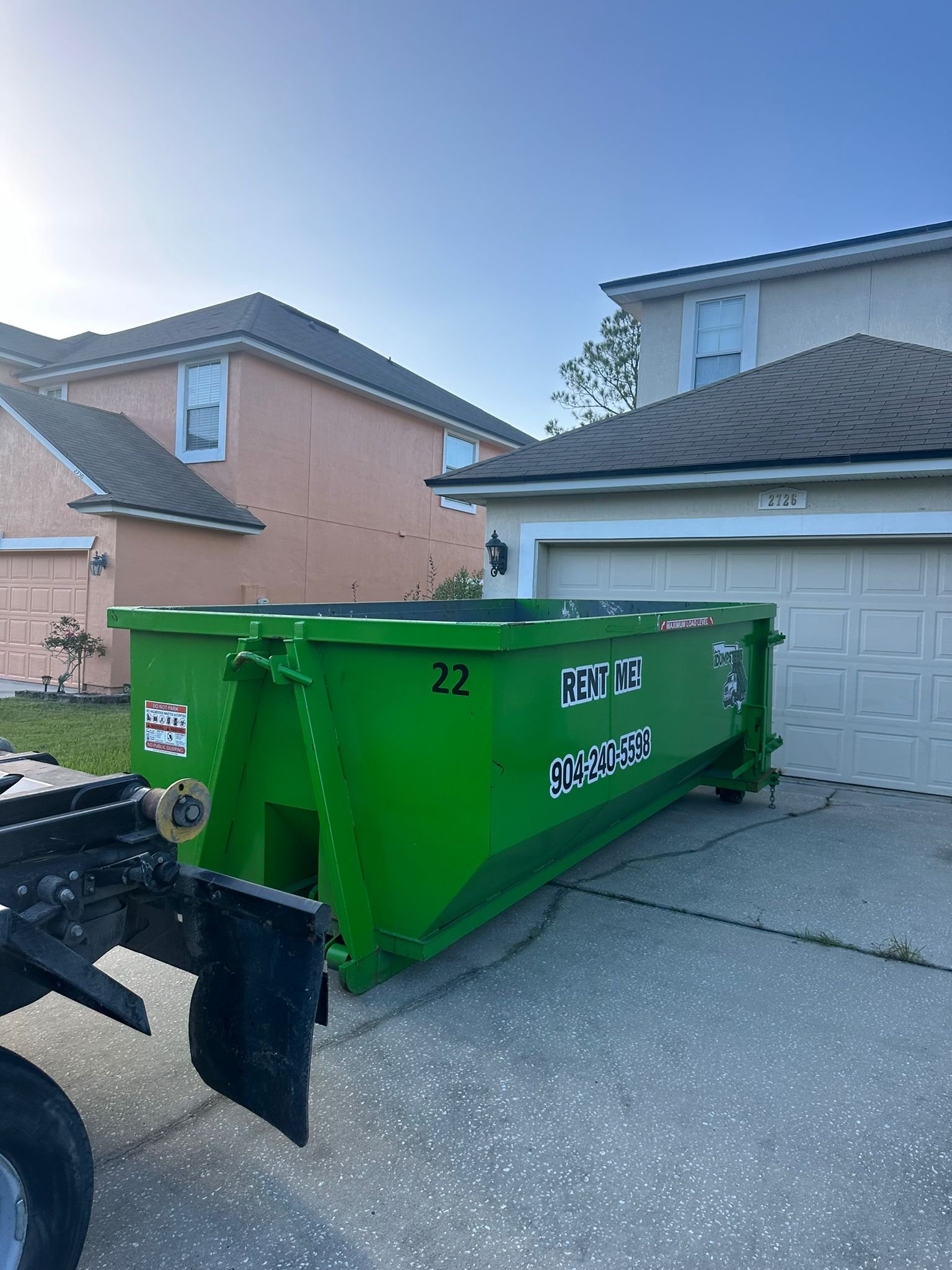
At 904 Dumpster, we are a locally owned dumpster rental company serving Jacksonville and Northeast Florida since 2016. We provide 10, 15, and 20-yard roll-off dumpsters for residential and commercial projects with flat-rate pricing starting at $299.
Why Kitchen Renovations Produce So Much Waste
Kitchens are densely packed rooms. Every square foot of wall and floor space is covered with something: cabinets above and below, countertops, backsplash tile, flooring that often has multiple layers, appliances, lighting fixtures, and plumbing fixtures. When you strip all of that out, the volume of material is staggering.
A typical Jacksonville kitchen ranges from 100 to 250 square feet, but the waste it produces is disproportionate to its size because of the density and weight of the materials involved. Ceramic tile is heavy. Granite and quartz countertops are extremely heavy. Wood cabinets are bulky. And the adhesives, grout, and substrate layers underneath everything add even more volume and weight.
Explore Our Services
What Waste to Expect at Each Stage
Stage 1 - Kitchen Cleanout and Preparation
Before any demolition begins, the kitchen needs to be completely emptied. Every dish, utensil, small appliance, pantry item, and cleaning supply needs to move to another room. This is also a good time to sort through what you actually use versus what has been sitting in cabinets untouched for years.
Many homeowners discover that their kitchen cleanout alone fills several trash bags with expired food, broken utensils, and items they no longer need. Consider donating usable kitchen items to Goodwill or Habitat for Humanity ReStore in Jacksonville before the renovation starts.
Stage 2 - Appliance Removal
Old appliances are among the first items removed. A standard kitchen has a refrigerator, stove or range, dishwasher, microwave (often built-in), and possibly a garbage disposal and range hood. These appliances are bulky and heavy, but many can be donated, sold, or recycled rather than thrown in a dumpster.
Jacksonville has several appliance recycling options, and many scrap metal dealers will pick up old appliances for free because of their metal value. If appliances are in working condition, organizations like Habitat for Humanity ReStore accept donations. For broken appliances that cannot be donated, they can go in your dumpster. Read our recycling guide for Jacksonville construction projects for more options.
Stage 3 - Cabinet and Countertop Demolition
This is where the bulk of kitchen renovation waste comes from. A typical set of upper and lower cabinets from a U-shaped or L-shaped kitchen produces 3 to 6 cubic yards of waste. Cabinets are bulky because of their box construction, and breaking them down with a pry bar reduces their volume significantly.
Countertop waste varies dramatically by material:
| Countertop Material | Weight per Linear Foot | Disposal Notes |
|---|---|---|
| Laminate | 5-10 lbs | Lightweight, easy to break down |
| Granite | 20-25 lbs | Very heavy, handle carefully |
| Quartz | 20-25 lbs | Very heavy, similar to granite |
| Butcher block | 10-15 lbs | Can sometimes be recycled as wood |
| Concrete | 25-30 lbs | Extremely heavy, watch weight limits |
If your kitchen has granite or quartz countertops, the weight adds up fast. A 30-linear-foot countertop in granite weighs 600 to 750 pounds. Factor this into your dumpster weight planning.
Stage 4 - Flooring Removal
Kitchen flooring removal is often the most labor-intensive part of the waste equation, especially in older Jacksonville homes where multiple layers of flooring have been installed over the decades. It is common to find vinyl over tile over hardwood, each layer requiring removal before new flooring goes down. If your home was built before 1978, be aware that the EPA Renovation, Repair and Painting rule requires lead-safe work practices when disturbing painted surfaces.
Ceramic tile removal is particularly waste-heavy. The tile itself weighs about 4 pounds per square foot, and the mortar bed underneath can weigh another 5 to 10 pounds per square foot. For a 200-square-foot kitchen, ceramic tile and mortar alone can produce 1,800 to 2,800 pounds of debris.
Laminate flooring removal produces lighter waste but still significant volume. Laminate planks, underlayment foam, and any adhesive or transition strips need disposal. A 200-square-foot kitchen produces roughly 1 to 2 cubic yards of laminate waste.
Vinyl flooring is the lightest option to remove but can be complicated in older homes where it was glued directly to a plywood subfloor. In some cases, the subfloor comes up with the vinyl and needs replacement.
Stage 5 - Backsplash and Drywall
Removing backsplash tile almost always damages the drywall behind it. Plan to replace the drywall in the backsplash area at minimum. If water damage is discovered behind the sink or dishwasher area, which is common in Jacksonville's humid climate, you may end up replacing larger sections of drywall.
Drywall waste adds up quickly. A standard 4x8-foot sheet of drywall weighs about 50 to 60 pounds. Even replacing just the backsplash sections of a kitchen can produce 200 to 300 pounds of drywall waste.
Dumpster Sizes for Your Project
Choosing the Right Dumpster for Your Kitchen Renovation
Based on hundreds of kitchen renovation dumpster rentals throughout Jacksonville, here are our recommendations:
| Kitchen Size | Scope of Work | Recommended Dumpster |
|---|---|---|
| Small galley kitchen | Cabinets, counters, and flooring | 10-Yard |
| Average L-shaped kitchen | Full gut including backsplash and drywall | 15-Yard |
| Large U-shaped kitchen | Full gut with heavy countertops and tile | 15-Yard or 20-Yard |
| Kitchen plus adjacent rooms | Kitchen and dining/laundry renovation | 20-Yard |
For more help choosing, see our dumpster size guide or our how to choose the right dumpster size blog post.
You Might Also Read
Preparing Your Jacksonville Home for Kitchen Demo Day
Clear a Path
The path from your kitchen to the dumpster in your driveway needs to be completely clear. Remove rugs, fragile items, and anything in hallways and doorways that could be bumped or damaged. Protect hardwood floors in adjacent rooms with heavy-duty drop cloths or cardboard.
Set Up a Temporary Kitchen
Your kitchen will be completely unusable during demolition and potentially for weeks afterward. Set up a temporary cooking and eating area in another room with a microwave, mini fridge, paper plates, and your coffee maker. Jacksonville has plenty of great restaurants for the nights when you just cannot deal with another microwave meal.
Cover and Seal Adjacent Rooms
Kitchen demolition produces enormous amounts of dust, especially when removing tile, drywall, and grout. Seal doorways to adjacent rooms with plastic sheeting and painter's tape. This is particularly important in Florida where HVAC systems run frequently and can spread construction dust throughout the entire house.
Schedule Dumpster Delivery
Book your dumpster at least two days before demolition begins. Having the container on-site and ready means debris goes directly from the kitchen into the dumpster without intermediate staging. We deliver throughout Jacksonville and surrounding communities including Ponte Vedra, St. Augustine, and Fernandina Beach.
"904 Dumpster was by far the best dumpster service I've used yet. Dumpsters were in great shape, empty when they were dropped and the price was very good!"
- Paul Yarger, Google Review
What Cannot Go in the Dumpster from a Kitchen Renovation
Most kitchen renovation debris is accepted in our dumpsters, but there are a few exceptions. Liquid paint, chemical solvents, and refrigerators that still contain refrigerant require special disposal. If your old refrigerator needs the refrigerant removed before disposal, many HVAC companies in Jacksonville offer this service for a small fee. For a complete list of restricted items, read our guide on what cannot go in a dumpster.
Frequently Asked Questions
A typical Jacksonville kitchen renovation produces 6 to 12 cubic yards of debris, weighing 2,000 to 5,000 pounds depending on materials. Kitchens with ceramic tile floors and granite countertops produce heavier waste, while kitchens with laminate and vinyl produce lighter but still significant volumes.
Professional ceramic tile removal in Jacksonville typically costs $3 to $6 per square foot for labor. The dumpster rental for tile disposal starts at $299 for a 10-yard container. For a 200-square-foot kitchen, total tile removal and disposal costs range from $875 to $1,475.
Most kitchen renovations in Jacksonville fit well in a 15-yard dumpster. Smaller galley kitchens can get by with a 10-yard, and large kitchens with heavy tile and stone countertops may need a 20-yard. When in doubt, size up. The price difference is only $50, and it is cheaper than ordering a second container.
Yes, if they are in reasonable condition. Habitat for Humanity ReStore on North Main Street in Jacksonville accepts used cabinets, countertops, sinks, and appliances. Donating usable materials reduces your waste volume and may provide a tax deduction.
Our standard rental includes 5 days, which covers the demolition phase of most kitchen renovations. If your project timeline is longer, we offer affordable extensions. Many homeowners rent one dumpster for demo and a second later for construction waste from the rebuild phase.
Sorting is not required but can reduce disposal costs. Metal fixtures, copper pipes, and steel appliances can go to scrap yards. Clean wood from cabinets can sometimes be recycled. See our recycling guide for Jacksonville construction projects for details on local recycling options.
Tags
Related Articles
Dumpster Rental Calculator and Debris Volume Estimator
Not sure what size dumpster you need? Learn how to estimate your debris volume in cubic yards, understand dumpster weight limits, and choose the right roll-off container for your project in Jacksonville.
What You Can Actually Recycle from Your Jacksonville Project
Many common construction materials can be recycled in Jacksonville, including metal, concrete, clean wood, cardboard, and asphalt. Recycling saves landfill space and can even reduce your disposal costs.
Yard Drainage Solutions and Debris Removal Guide
Yard drainage projects generate significant amounts of dirt, gravel, old pipe, and landscaping debris. Understanding what waste to expect and how to dispose of it keeps your drainage project on schedule and your property clean.