A complete step-by-step guide to tackling your garage cleanout in Jacksonville, from sorting and organizing to choosing the right dumpster size for all that junk.
How to Clean Out Your Garage Without Losing Your Mind
A garage cleanout in Jacksonville can feel overwhelming when years of accumulated stuff has taken over your parking space, but with the right plan, sorting strategy, and a home cleanout dumpster in your driveway, you can reclaim your garage in a single weekend. 904 Dumpster makes the process simple with same-day delivery and flat-rate pricing, so you can focus on sorting and decluttering instead of worrying about logistics. The key is working in stages so you don't burn out or make emotional decisions about what stays and what goes.
If you have ever opened your garage door and felt a wave of dread wash over you, you are not alone. Across Jacksonville, homeowners are dealing with garages packed floor to ceiling with holiday decorations, broken furniture, outgrown toys, mystery boxes from the last move, and tools they forgot they owned. The average two-car garage in Northeast Florida holds somewhere between 300 and 600 square feet of potential living or working space, and most of us are wasting every inch of it on stuff we never touch.
This garage cleanout guide walks you through the entire process from start to finish, including how to sort your belongings, where to donate items in Jacksonville, what can and cannot go in a dumpster, and how to choose the right dumpster size for your project. Whether you are tackling a mild clutter situation or a full-blown hoarder-level disaster, these steps will get you through it.
Why Jacksonville Garages Get So Cluttered
Florida humidity plays a huge role in garage clutter problems. Unlike homeowners in drier climates who can store paper goods, clothing, and electronics in the garage without much worry, Jacksonville residents deal with moisture levels that destroy cardboard boxes, grow mold on fabric, rust metal tools, and warp wooden furniture. Many homeowners shove items into the garage with good intentions of organizing later, only to discover months or years down the road that moisture has ruined half of it.
The lack of basements in Florida homes also contributes to garage clutter. In northern states, the basement serves as the primary storage overflow zone. In Jacksonville, the garage is the only option for bulky items that don't fit inside the house. Add in Florida's year-round outdoor lifestyle, which means storing bikes, kayaks, fishing gear, surfboards, and lawn equipment, and you have a recipe for a garage that fills up fast.
How Long Does a Full Garage Cleanout Take?
A full garage cleanout typically takes one to two days for a two-car garage, depending on how much stuff you have and how many helpers you recruit. If you plan ahead, rent a dumpster before you start, and follow a sorting system, most homeowners can finish in a single weekend. Larger garages or heavily packed spaces may take three days.
Explore Our Services
Step 1 - Schedule Your Dumpster Delivery First
Before you pull a single item out of the garage, schedule your dumpster delivery. This is the most important step because having a dumpster in your driveway creates a deadline and a destination for everything you are throwing away. Without it, you will end up with trash piles in your yard and lose motivation halfway through.
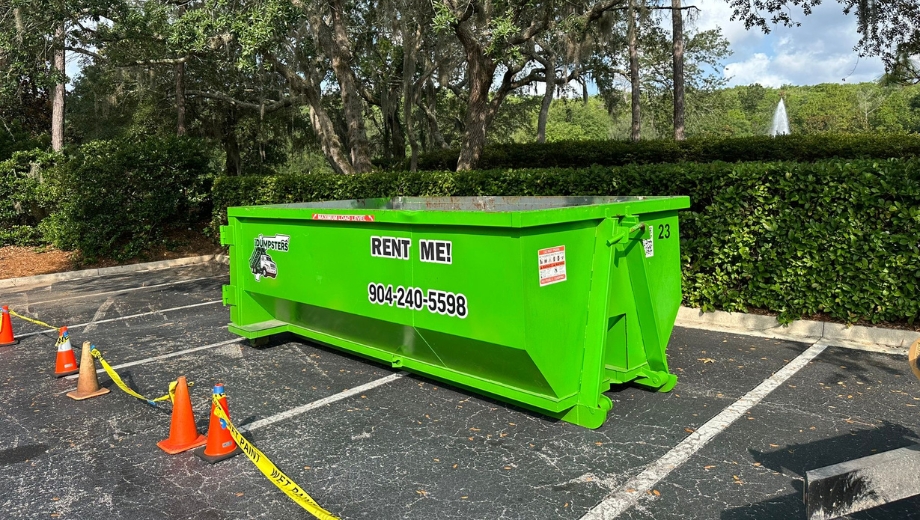
For most garage cleanouts in Jacksonville, a 10-yard dumpster is the right choice. A 10-yard container measures approximately 12 feet long by 7.5 feet wide by 3.6 feet tall and holds about 1 ton of material. That is enough for the contents of a heavily cluttered single-car garage or a moderately cluttered two-car garage. If you know your garage is packed to the rafters, or you are also cleaning out a shed or patio area, step up to a 15-yard dumpster to give yourself extra room.
At 904 Dumpster, we offer same-day or next-day delivery throughout Jacksonville and surrounding areas. Call us at (904) 240-5598 to schedule your drop-off, and we will place the dumpster exactly where you need it in your driveway.
"Very professional and on time. Great customer service."
- Neemy Michel, Google Review
Step 2 - Gather Your Supplies
Before you start pulling items out of the garage, gather these supplies:
Set up four clearly marked zones in your driveway or yard: Keep, Donate, Sell, and Dump. Every single item that comes out of the garage goes into one of these four zones. No exceptions, no "maybe" pile.
You Might Also Read
Step 3 - Empty the Garage Completely
This step sounds extreme, but it is essential. Pull everything out of the garage and into the driveway. Yes, everything. You cannot properly sort and organize if items are still buried behind other items. Working in sections might feel easier, but it usually results in shuffling things from one pile to another without making real progress.
Start with the items closest to the garage door and work your way to the back wall. As you pull items out, make a quick gut decision about each one and place it in the appropriate zone. If you have not used something in over a year, it almost certainly belongs in the Donate or Dump zone. Be honest with yourself about whether you will actually use that exercise equipment, finish that half-built project, or fit into those old clothes.
What Should I Do With Items Damaged by Florida Humidity?
Items with visible mold, mildew, rust damage, or water stains should go straight into the dumpster. Mold is a serious health concern in Florida, and trying to salvage moldy furniture, books, or clothing is not worth the risk. Cardboard boxes that have gone soft or show signs of moisture damage should be thrown away as well, since they may harbor mold spores even if you cannot see visible growth. Donate only items that are clean, functional, and in good condition.
Step 4 - Sort Ruthlessly Using the One-Year Rule
The one-year rule is simple: if you have not used an item in the past 12 months, you probably do not need it. Apply this rule to everything except seasonal items like holiday decorations and emergency supplies like hurricane kits. Jacksonville homeowners should definitely keep their hurricane preparedness items since they are essential during storm season from June through November.
Items to Keep: Tools you actually use, seasonal decorations in good condition, hurricane supplies, sporting equipment you use regularly, automotive supplies for your current vehicles, and anything with genuine sentimental value that you cannot replace.
Items to Donate: Clothing that no longer fits, furniture in good condition, working electronics you have upgraded from, books, kitchenware, and toys your children have outgrown.
Items to Sell: High-value items like power tools, bicycles, kayaks, and furniture sets can be listed on Facebook Marketplace or OfferUp. Set a deadline of two weeks to sell these items. If they don't sell, donate them.
Items to Dump: Broken furniture, damaged goods, old paint cans that have dried out, rusted tools beyond repair, torn screens, rotted wood, and anything else that no person or organization would want.
Step 5 - Where to Donate in Jacksonville
Jacksonville has several excellent donation centers that accept garage cleanout items. Here are the best options:
Goodwill Industries operates multiple drop-off locations across Jacksonville, including stores on Beach Boulevard, Blanding Boulevard, and San Jose Boulevard. They accept clothing, furniture, electronics, books, and household goods during business hours. No appointment needed.
Habitat for Humanity ReStore on Phillips Highway accepts building materials, tools, appliances, furniture, and home improvement supplies. This is the best option if your garage cleanout produces usable lumber, hardware, doors, windows, or fixtures. They offer free pickup for large donations.
The Salvation Army on North Main Street accepts furniture, clothing, and household items. They also offer pickup service for large items, which can save you time and energy during your cleanout.
City Rescue Mission downtown accepts clothing, furniture, and household goods. Your donations directly support their programs for Jacksonville's homeless population.
If you are cleaning out a garage in the surrounding areas like St. Augustine or Orange Park, each community has its own local donation options as well.
What Cannot Go in a Dumpster During Your Garage Cleanout
This is critical information that many homeowners overlook. Certain items commonly found in garages are prohibited from roll-off dumpsters due to environmental and safety regulations. Before you start tossing things, review our full guide on what cannot go in a dumpster.
Hazardous materials are the most common garage items that require special disposal:
"Excellent service, super nice company, shows up every-time when expected which is really needed when managing a project or renovation"
- Dalton Guinn, Google Review
Step 6 - Load the Dumpster Strategically
Once you have sorted everything and your Dump pile is ready, it is time to load the dumpster. Load flat items like plywood, shelving, and tabletops first to create a base layer. Then add bulky items like old furniture and broken equipment. Fill gaps with smaller items and bags of trash. Breaking down boxes and cutting apart large items helps you fit more into the container.
Distribute weight evenly across the dumpster. Do not pile everything on one side, as this makes the container difficult and potentially unsafe to load onto our truck. Keep all items below the top edge of the dumpster. Overfilled containers cannot be safely transported.
Step 7 - Clean and Organize the Empty Garage
With the garage completely empty, take the opportunity to deep clean before putting anything back. Sweep the entire floor, paying attention to corners where spider webs, dead insects, and debris accumulate. In Jacksonville, garages are common entry points for pests like palmetto bugs, spiders, and occasionally even snakes, so a thorough cleaning helps discourage them.
If your garage floor has oil stains, apply a concrete degreaser and scrub with a stiff brush. Rinse with a hose and let everything dry completely before bringing items back inside. Florida humidity means you want everything as dry as possible to prevent future mold issues.
How Can I Prevent Future Garage Clutter?
Install wall-mounted shelving, pegboard systems, and ceiling-mounted storage racks to keep items off the floor and organized. Use clear plastic bins instead of cardboard boxes so you can see what is inside without opening them. Plastic bins also resist Florida humidity far better than cardboard. Label everything clearly and create designated zones for categories like holiday decorations, tools, sports equipment, and automotive supplies.
How to Choose the Right Dumpster Size for Your Garage Cleanout
Choosing the right dumpster size saves you money and prevents the frustration of running out of space mid-project. Check out our dumpster size guide for detailed dimensions and capacity comparisons. For a quick reference:
Not sure which size is right? Call 904 Dumpster at (904) 240-5598 and describe your project. We will recommend the right container based on years of experience with Jacksonville garage cleanouts.
Tips for Garage Cleanouts in Jacksonville's Heat
Florida weather adds a unique challenge to garage cleanouts. The garage itself can reach temperatures well above 100 degrees during summer months, and even spring and fall days can be brutally hot when you are doing physical labor. Here are some Jacksonville-specific tips:
Garage Cleanout Cost Breakdown
The total cost of a garage cleanout in Jacksonville depends on how you approach it. Here is a typical breakdown for a DIY cleanout with dumpster rental:
Compare that to hiring a full-service junk removal company, which typically charges $400 to $800 or more depending on the volume of items. The DIY approach with a dumpster rental gives you more control, more time to sort through items, and usually costs less.
Frequently Asked Questions
A 10-yard dumpster from 904 Dumpster costs $299 and includes delivery, pickup, disposal fees, and a 3-day rental period. This is enough for most standard garage cleanouts. If your garage is extremely full or you are cleaning out additional areas, a 15-yard dumpster at $349 provides extra capacity. There are no hidden fees or surprise charges.
Yes, old furniture is one of the most common items that goes into a dumpster during a garage cleanout. Couches, tables, chairs, desks, bookshelves, dressers, mattresses, and bed frames can all go in the dumpster. Breaking furniture into smaller pieces helps you fit more into the container and makes better use of the available space.
Our standard rental period is 5 days, which gives most homeowners plenty of time to complete a garage cleanout at a comfortable pace. If you need more time, just call us to arrange an extension. We understand that life happens and cleanout projects sometimes take longer than expected.
If the dumpster sits entirely on your private property, such as your driveway, no permit is required in Jacksonville. If you need to place the dumpster on a public street or right-of-way, you may need a permit from the City of Jacksonville. Read our Jacksonville dumpster permit guide for complete details on permit requirements and how to apply.
Late fall through early spring, roughly November through March, offers the most comfortable working temperatures for a garage cleanout in Jacksonville. You avoid the extreme summer heat and the daily afternoon thunderstorms. Spring is also ideal because you can time your cleanout with our spring cleaning checklist for Jacksonville to maximize your decluttering momentum.
Related Resources
Tags
Related Articles
The Complete Guide to Home Cleanouts in Jacksonville
Whether you are downsizing, preparing to sell, or simply decluttering, a home cleanout can feel overwhelming. This comprehensive guide walks you through every step of the process.
The Ultimate Spring Cleaning Decluttering Guide for Jacksonville Homeowners
A room-by-room spring cleaning plan for Jacksonville homeowners covering what to toss, what to donate, and when a dumpster rental makes the job easier.
What Actually Fits in a 10-Yard Dumpster
A 10-yard dumpster holds about 3 pickup truck loads of debris. See real examples of what fits, from garage cleanouts to small renovations, with tips on maximizing space.